One of the things which never gets old about being a music fanatic (well, so far, at least) is how way can lead to way. You're reading a piece about a favorite artist and they mention some other artist, whom you've never even heard of before. And because we currently live in the age of miracles, you can just search for this new artist—the band Mount Eerie, which is apparently largely the work of Phil Elverum—and you discover he's been recording since the beginning of the century and you've just missed him. So you zip on over to YouTube and not only the song mentioned but indeed the entire album (2017's A Crow Looked at Me) is available, thanks to the artist himself. And you dive in and a bit later you hear a song and it just hits like a gosimer wrecking ball.
And thanks to that websearch, you know that this album was not only written in the wake of his young wife's death but indeed in the room where she died, using her own instruments.
Today I just felt it for the first time
Three months and one day after you died
I realized that these photographs we have of you
Are slowly replacing the subtle familiar
Memory of what it's like to know you're in the other room
To hear you singing on the stairs
A movement, a pine cone, your squeaking chair
The quite untreasured
In between times
The actual experience of you here
I can feel these memories escaping
Colonized by photos narrowed down and told my mind erasing
The echo of you in the house dies down
October wind blows
It makes a door close
I look over my shoulder to make sure
But there is nobody here
I finally took out the upstairs bathroom garbage that was sitting there forgotten since you were here
Wanting just to stay with us
Just to stay living
I threw it away
Your dried out, bloody, end-of-life tissues
Your toothbrush and your trash
And the fly buzzing around the room
Could that possibly be you too?
I let it go out the window
It does not feel good
I can't say I enjoy this song and yet at the same time I love it.
Imprinting is a powerful force. It's not unusual for someone to permanently feel that whatever they first heard/saw/read is and always will be The Best Version or The Right Way.
Certainly, I've found again and again that's how it so often is for me. The first cycle I heard of Carl Nielsen's symphonies were conducted by Neeme Järvi and I fell deeply in love from the opening bars. I've since heard a dozen other cycles, many of which are objectively better—if such a thing is possible, and I think it is—but the Järvi still holds a place in my heart that those superior versions can't quite displace.
So with what is by far the best Blind Faith song, "Can't Find My Way Home." My first time hearing it was the live duet Eric Clapton played during the 70s with later hitmaker Yvonne Elliman. Its lovely, laidback, slightly woozy feel pulled me in and I was a goner. I'm not sure why it hit a teenage me so hard but, hey, music's mysterious.
I was already a big van of Steve Winwood, thanks to his brilliant from stem-to-stern solo LP, Arc of a Diver, so when I could scrape together the money, I excitedly bought the Blind Faith LP...and was about as disappointed as I've ever been in a record.
That a talent as huge and assertive as Winwood should take center stage was perhaps not surprising, but it was still a letdown that Clapton disappeared as much as he did; rather than a collaboration, the album was closer to a Winwood outing with famous friends playing along. And, unfortunately, one of those friends was Ginger Baker, who reminds the listener over and over again why Clapton had recently decided to stop playing with Baker. For all his own talents, there's a reason virtually none of his collaborators played with Ginger on a longterm basis. I mean, Winwood's the reason Ginger joined Blind Faith, and it doesn't seem coincidental that aside from a brief stint together in Ginger Baker's Air Force, they never really played together again.
Baker's brushwork is fine if unexceptional. His tom asides are actually kinda cool. But the explosive splashes he adds are just awful—jarring and tasteless. The twin guitar work of Clapton and Winwood—a greatly underrated guitarist–is lovely but it's not enough to push away the feeling that this is an exceptionally meticulous demo rather than the better final product it would later become.
Such as this acoustic outing from decades later, as a nearly 45-years-older Winwood plays with delicacy and uses his otherworldly voice with dexterity and discretion.
Which, I guess, is to say that imprinting is a powerful force. But it's not the end-all and be-all, because I'd take solo acoustic Winwood over any other version any day, terrifying fire crackles and all.
Two legendary bands, at seemingly the height of their respective greatness, 20 years apart. Yet neither were satisfied with the enormity of their success and wanted to go bigger, newer and yes, even better.
And somehow they did.
The bands were The Who and U2. The years were 1971 and 1991—two absolutely monstrous years in music. And they each put out an album that signaled far and wide that the bands that the masses once new had changed. And a different era was underway.
Who’s Next. Achtung Baby. Absolute 100% bona fide game-changers. Any list of the greatest and most important albums in rock-n-roll history has these two albums on it. And if it doesn’t, the list is incomplete, almost stupidly so.
And here’s one more beautiful thing The Who and U2 had in common with these albums. The bands knew they were entering untouched territory, and they knew they had to let the listeners know that from the very start.
So from the first seconds of opening tracks of those two albums, “Baba O’Riley” and “Zoo Station”—both amazing tunes, to be sure—our speakers and our ears were flooded from the get-go with sounds we had never heard from either band before. And holy cow did it get our attention. And still does today, to anyone listening.
Think about it.
The epic synth drone which lifts “Baba O’Riley” up to some space-age plain the second the needle drops on Who’s Next was a brand new frontier for The Who. They had done some fine albums and all those great and taut Maximum R&B singles and then in 1969, with Tommy, they invented the rock opera and created an album that seemed to almost swallow their identity…mostly in a good way. But they needed to move on and looked even bolder, brasher. Even bolder and more brash than Tommy had been two years earlier; after all, The Who had dabbled splendidly in longer-form narrative before Tommy (“A Quick One While He’s Away” in 1966, “Rael” a year later). But they had never, EVER tried anything like this before.
And those sounds that open “Baba O’Riley,” that hypnotic and circular Lowery organ pattern which seems to have been dreamed up as much by Arthur C. Clarke or Stanley Kubrick as by Pete Townshend, damned if it didn’t work and take the listeners on an uncharted journey. No one could have expected it, but within seconds we couldn’t imagine music without it.
Fast forward 20 years. Now how about the volcanic industrial sound that drops into our laps about three seconds into “Zoo Station,” a sound so thunderous and forboding it almost sounds like the musical version of The Big Bang. This was not "traditional U2", awash in reverb and shimmering delay and spiritual and political forthrightness we had come to know and deeply love, played majestically from Boy through The Joshua Tree. This was cataclysmic sonic mayhem, all metal and stone and echoes and shadows and distortion. U2 had conquered all worlds by 1991, even trotting out the highly subversive and (according to at least this writer) highly underrated multi-media experiment of Rattle and Hum in 1988. But now, much like The Who in 1971, they needed more, and they got more.
And much like “Baba O’Riley,” it all sounded like world-building, because it was. For “Baba” it was a gateway into the aimless, miasmic plasma of the 1970s and out of the (fictitious) Age of Aquarius. For “Zoo” it was a guillotine to the Reagan-Thatcher years of despotic, plastic self-virtue (laid in musical form by years of empty-headed Aqua Net-pasted glam metal) and an invitation to blaze new trails across previously neglected human wastelands. In every sense of the word this was music of change.
And neither exactly occurred in a vacuum—both came out at momentous times in rock-n-roll history amidst staggering competition, and still were able to not just stand on their own, but stand victorious and proud amongst the very very best musical offerings of their respective years. Or most any years.
I mean, 1971. Look. LOOK at the kind of the music their counterparts were offering:
Marvin Gaye – What’s Going On
Led Zeppelin – Led Zeppelin IV
Joni Mitchell – Blue
Rolling Stones – Sticky Fingers
John Lennon – Imagine
Sly and the Family Stone – There’s a Riot Goin’ On
David Bowie – Hunky Dory
Funkadelic – Maggot Brain
Carole King – Tapestry
Allman Brothers –At Fillmore East
I mean. I mean!
Not to be outdone, 1991? Well…again, just look:
Nirvana – Nevermind
Metallica – Metallica
R.E.M. – Out of Time
Matthew Sweet – Girlfriend
Michael Jackson – Dangerous
Public Enemy – Apocalypse 91: The Enemy Strikes Back
Dinosaur Jr. – Green Mind
Pearl Jam – Ten
A Tribe Called Quest – The Low End Theory
P.M.Dawn: Of the Heart, of the Soul and of the Cross: The Utopian Experience
Those are a couple of Murderer’s Rows of musical years, and sure, maybe some of those albums were as good as Who’s Next and Achtung Baby, but none of them—NONE of them—were better.
Both offered a promise of a new day, a new musical awakening, with those opening tracks, and both delivered. Because of course it didn't stop there. In addition to the epochal starters each album contained arguably the respective bands’ greatest songs (“Won’t Get Fooled Again” and “One”), some statement of purpose masterpieces (“Behind Blue Eyes,” “Song Is Over” for the Who, “Mysterious Ways,” “Until the End of the World” for U2”) and, yes, some familiar musical territory done with as much muscle and gritty agency as ever (“Bargain” on Who’s Next, “Even Better Than the Real Thing” on Achtung Baby).
They were gutsy moves. Two of the greatest bands ever, each having reached pinnacles they couldn’t have imagined when they were starting out years earlier. Each wanting more. And each getting it.
It’s unfair to offer that they never would be that good again, because how do you top sheer once-in-a-lifetime masterpieces? Hell, if they didn’t equal those efforts they came pretty close—All That You Can’t Leave Behind, Quadrophenia, The Who By Numbers, How to Dismantle an Atomic Bomb—and that’s saying more than something. But those efforts they churned out in 1971 and 1991 remain sui generis works of art. And if there’s one thing that art does, it lives. Does it ever.
The Who and U2 live forever in those opening generational strains of “Baba O’Riley” and “Zoo Station.” The music explains why, as it always has.
I've been an obsessed music fan for more decades than I like to consider, and one thing that has hit me over and over is just how wrong so many great artists can be about their own art.
“There are some things I would have done a little different now,” said Copeland. “There are too many drum overdubs. It’s such a great song, and then it comes to the end, and [if I hear the song on the radio] I’ll switch over to another station because I screwed up.”
However, Copeland isn’t taking all of the blame for the over-the-top drumming in the hit’s last few seconds.
“Where was Andy [Summers, Police guitarist] at that moment?” he mused. “Andy was a really good filter, because we all overdid it, but then usually Andy would say, ‘No. Too much. Too much. Less is more.’ And he was usually right. Where was he when I needed him at the end of ‘Message in a Bottle’?”
It's a fascinating insight...until one listens to the recording in question, at which point Copeland's POV is unambiguously revealed to be completely and totally wrong.
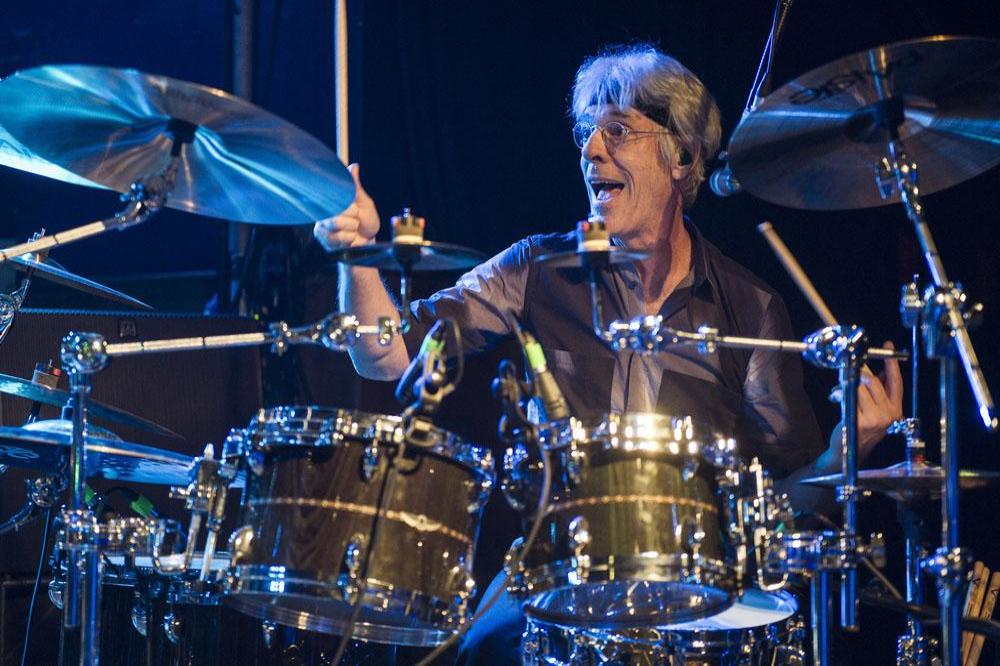
(Sidenote: how silly does a drummer look air-drumming? Even the great Stew-Cope can't make that look cool. Fortunately, the World's Coolest Man—and at that point he really was a serious contender—is next to him in a bowtie to take quite a bit of the heat.)
I mean, seriously, just listen to this guy! He could have gone on like, unaccompanied, for another twenty minutes and it still wouldn't have been enough.
I'm always excited by the prospect of a new Dinosaur Jr album; for my money, they're easily the most artistically successful band reunion ever. And "I Ran Away," the first track released off their new album, Sweep It Into Space sounds like vintage post-Green Mind Dino Jr, which is to say, spectacular.
But "Garden," the track just released today, is really something else. The new LP apparently has two or three songs written by Lou Barlow, as usual. And they're generally good, although I find to my surprise and disappointment that I almost always like Barlow's solo work better than his Dinosaur Jr stuff; I like his band offerings, generally, but I often love his solo outings. He was ridiculed in their early days for being so emotional, and it sometimes seems to me that his band songs downplay that slightly, but he leans into it on his solo records, with superior results.
But here he seems to have somehow found the magical combination. It's got that emo Barlow feel, and his more conventional vocals are especially strong here. But it also has a distinctly Sufjan Stevens Carrie & Lowell vibe to it, but with a J Mascis guitar solo. And since perhaps the only thing better than a distinctly Sufjan Stevens Carrie & Lowell vibe is a J Mascis guitar solo, well, this is simply superb.
Happy 50th birthday to Layla and Other Assorted Love Songs, one of the all-time great double albums, one of the all-time great guitar bands, and the artistic highpoint of Eric Clapton's career.
It's been interesting to watch as this album, which was so acclaimed when Greatest Albums Ever lists first became a thing in the 80s to nearly forgotten here, outside of aging boomers and Dad Rock adherents. And it's a shame, because while classic rock radio is a dustily mild abomination, this album truly is a five-star classic gem. It's got one of the all-time great rhythm sections in Carl Radle and the phenomenal Jim Gordon, Bobby Whitlock was a killer second vocalist, and Duane Allman kicked Clapton's ass up one side and down the other...and rather than resenting it, Slowhand absolutely loved it, recognizing that it was exactly what he needed and that the results were better than anything he'd ever done (or, sadly, would ever do again). So damn good.
I have written it many times here on Reason to Believe, almost on an annual basis. On Election Day each year I tend to turn to Bob Dylan. As there is no voice for the unheard, advocate for the unseen, and spotlight into the darkness that has been louder, more prominent or shone brighter than Mr. Zimmerman for more than a half-century now. A big part of American music? Hell, Bob Dylan is American music. He is America, through and through.
So today I listened to a few old nuggets, some of which have been featured here before. The clarion call for the forgotten of "Chimes of Freedom." The meditation of hollow exceptionalism that is "With God On Our Side." The monument to white privilege and injustice that is "The Lonesome Death of Hattie Carroll." And the paean to Medgar Evers and the civil rights movement that is "Only A Pawn in Their Game."
Those words rang out in the early 1960s and they still ring out today. Because they have to.
And our votes counted and needed to be counted in 1800 and 1864 and 1904 and 1932 and 1952 and 1960 and 1964 and 1972 and 1980 and 1992 and 2000 and 2008 and on and one because they always will, and always have to.
So consider this my annual PSA. Listen to a little Bob Dylan today. And then go vote. It always feels so good when we do!
Happy Election Day. Go vote!
"Through the wild cathedral evening the rain unraveled tales, For the disrobed faceless forms of no position. Tolling for the tongues with no place to bring their thoughts, All down in taken-for-granted situations,
Tolling for the deaf and blind, tolling for the mute, Tolling for the mistreated, mateless mother, the mistitled prostitute, For the misdemeanor outlaw, chased and cheated by pursuit, And we gazed upon the chimes of freedom flashing."
I confess that I have never really been a fan of Van Halen. I love some of their songs, don't get me wrong ("Dance the Night Away" is a perfect song, as an example), but despite growing up exactly during the time when they hit it huge, my VH phase really didn't last that long.
I mean sure, I remember owning the first three albums and getting into it at my musical awakening when I was 12-13. But my tastes later veered in other directions and I kinda left Van Halen in the rearview mirror. Not that this had any impact on the band, of course.
But while the music didn't thrill me, Eddie Van Halen usually did. How could he not? Just the way he made guitar fans out of so many Gen Xers was impressive enough. Wickety-wickety guitar playing is touch and go with me (no pun intended...no, you know what? Screw it, that was pretty good. Pun intended!). Which is why Joe Satriani and Yngwie Malmsteen just never got me excited. But when it was melodic and not just going for land speed records? Yeah, I could dig that. And that's what Eddie Van Halen always seemed to bring. Sure it could be lightning fast, but it was tuneful and even, often times, soulful.
"Eruption" was a sonic revelation. His work on "And the Cradle Will Rock" sounded like the guitar version of impending doom. "Atomic Punk." The aforementioned "Dance the Night Away." His epic turn on "Beat It." Eddie could play, and part of being a music fan is respecting those artists who could, even if maybe you don't love their stuff. That was Eddie Van Halen to me.
The other thing? I loved how he always seemed to have so much fun when he played. I ever saw the band live in concert (again, not a big enough fan for that), but I've seen plenty of clips and he has always seemed to belie the classic "lay back and let the frontman preen" guitar God persona. Think about the detached cool of Jimmy Page or (once long long ago) Keith Richards or Jeff Beck. That wasn't Eddie. Even though he had a life-sized, manshaped peacock in David Lee Roth dominating the stage, and later a hardly gunshy Sammy Hagar doing same, Eddie was still out there and seemingly having a blast. Never upstaging the showy glitter Gods at the microphone, but just smiling and hustling and laughing and looking like this was what he always wanted to do, this and only this. Bravo for that. Seriously.
The first ballad Paul Westerberg ever wrote as the front man for the Replacements (or at least the first one we're aware of) centered around drinking. "If Only You Were Lonely" has come up many times during this All Shook Down look back, because while it was just a B-side few people heard to a single no one ever bought in 1981, it remains huge in the band's legacy.
"If Only You Were Lonely" was a soaked and sullen country shuffle that was about exactly what the title said it was, and it shined a spotlight on the lethal mix of drinking and loneliness and what it would and could do the then-young singer and his bandmates. The song began Paul Westerberg's career as a peerless balladeer and would signal many monumental moments to come for him and the band. Because sadly and fittingly, drinking and coping with the causes and effects of it would define so much of what the Replacements were about over the course of 10 years, eight albums and so much fractured beauty and weary pain.
So it's only fitting that nine years later, he ended his career with the Replacements with one more ballad. And this one too was about drinking. But this time, it was about giving it up. That's "The Last."
But before we get to it, let's recap for a moment.
As has been said, All Shook Down is what will always pass for the Replacements' goodbye album, the last thing they would ever offer "together" before shuffling off into solo careers. And "together" is a loose term because there is so little of it on the album. By the most reliable math, Paul and Tommy Stinson play together on about three-quarters of the tracks, Slim Dunlap plays on maybe a little fewer than half and Chris Mars, unceremoniously (and unnecessarily) sacked from the band in these final days, plays on only a couple. And three of the 13 tracks are pretty much Paul by himself, save for the occasional guest appearance. That is hardly the stuff of the "all for one and one for all" ethos that most bands usually practice. But then the Replacements were never like most bands.
They were, at various times depending on where and when you caught them, unconscionably good, insanely reckless, abhorrently sloppy, maddeningly nihilistic, uproariously funny and dizzyingly inconsistent. They had one of the finest songwriters who ever lived in Paul Westerberg. In those early years they had the man who just may have created grunge guitar (in a very very good way) in Bob Stinson. They had a bass player in Tommy Stinson who would be a very high draft choice if anyone were to draft the all-time garage band. And they had (in the opinion of this humble writer and my blogging partner, anyway, and I am sure there are more who agree) a great intuitive drummer who kept it all together in Chris Mars. Later they had Slim Dunlap instead of Bob, who could play a fair bit but was widely credited with being a steadying presence the band always needed. They had a lot working in their favor, is what I mean to say. And it still was never enough for them to hit it big.
Why? Two words. The Replacements.
While not as outwardly destructive as the Sex Pistols or Guns-n-Roses, and not as tragically cut short as Nirvana, Elliot Smith or the Jimi Hendrix Experience were, the Mats will always be one of the most needlessly destructive bands that ever lived. They never ever could get out of their own way. Big break coming with a record label? Blow it up with a drunken, shambolic performance. Huge gig coming where the right people are watching? Blow it up with a drunken, shambolic performance. Hell, a national TV appearance on Saturday Night Live??? (Everybody now) Blow it up with a drunken, shambolic performance. It seems at every damn turn, they were there to pull the pin from the grenade and then slip it back into their pocket.
Dammit.
So perhaps this decade-long road with the Replacements, a period defined by letter-perfect gutter poetry and so much systemic substance abuse, was destined to come to an abrupt stop. Like a drunk driver trying to get his car out of the parking lot but instead crashing it into the wall, stalling and falling asleep until sober. Perhaps the sudden ending was inevitable, as so many of the tracks that layer All Shook Down ("Someone Take the Wheel," "When It Began," "Attitude") hinted. And within that inevitably we come to their very last and most aptly titled song they would ever write. "The Last."
As stated earlier, "The Last" is without question, on the surface, a song about giving up drinking, and perhaps other vices as well. Famously drunken and strung out for most of their career as a band, 1990 saw the Mats beginning to come to grips with addiction and turn things around. Published reports indicate this is the year Paul gave up drinking, and the others may very well have followed suit. Original member Bob Stinson would die five years later at 35 years old not of any particular drug overdose, but basically after a life and body worn down by abuse. That is such a tragic end to such a visionary guitar player, but it's sadly an understandable one. Paul and Tommy today remain productive solo and (in Tommy's case) session musicians, and Chris Mars has switched careers and turned into one hell of a fine artist. (Unfortunately Slim, who replaced Bob, suffered a terribly debilitating stroke a few years back and continues to suffer its effects). But the remaining band members are alive and kicking, and that was nowhere a surefire bet when they were blazing trails and raising hell in the 1980s.
That's why "The Last" serves well as the band's epitaph. It's not the most inventive song they would ever do. Or the most melodic. But it's probably the way things had to end. With a now sober Paul looking back, pondering all those gonzo twists and turns, and wondering what comes next in newfound sobriety.
Does it hurt to fall in love so easy? Does it hurt to fall in love so fast Does it hurt you to find out 32nd hand?
Is it such a big task? Are you too proud to ask? Remember last one was your last.
It's too early to run to momma, It's too late to run like hell. I guess I would tell ya ‘cause it don’t work to ask, That this one be your last.
And this one, child, is killing you. This one's your last chance To make this last one really the last.
Oh are you too proud to ask? Is it such a big task? Remember last one was your last.
The next one's always Gonna last for always. The next one's always on me..
Would it hurt to fall in love a little slower? I know it hurts at any speed. So you have another drink, And get down on your knees, You been swearing to God Now maybe if you'd ask?
That this one be your last? 'Cause this one, child, is killing you. And this one's your last chance, To make this last one really the last.
Gonna last for always... It's gotta last for always...
Paul is filled with questions on "The Last." About love. About what people are saying. About whether or not this time the quitting is for real. And he lays it out there. The lyrics, as tight and thoughtful as ever, sound like something taken from a group therapy session. The questions, the hard advice ("This one, child, is killing you," "You been swearing to God...now maybe if you'd ask?) seem to be offered not by some sage all-knowing advisor, but by someone who is in the trenches and suffering with you. And while the song lopes along at a very deliberate pace and doesn't seem to be in any hurry to get there, there is desperation in the words. This is the last chance. The last has to be the last this time if you want to live.
And that makes it downright haunting. This is crunch time. Listen to Paul at the bridge and in the outro, barely above a whisper, uttering those words that no drunk ever wants to hear: "The next one's always gonna last for always...gotta last for always...") Paul plays both the role of angel and devil on the shoulder on this song, offering words that are equal parts foreboding and tempting without being overly reassuring. Something I am guessing anyone who has ever battled dependency knows about all too well.
(As a side note, this rings very true to me on a personal level. I have a dear, dear friend who nearly died from alcohol abuse a bit more than a decade ago, and he was no told in no uncertain terms by this doctor that, because of the damage this caused his body, it's not that drinking again may kill him, but it will. Period. And as a very happy side note to this side note, that friend is now more than a decade sober and living a wonderful life.)
So yes, "The Last" is clearly a song about giving up drinking, just as "If Only You Were Lonely" was a song that centered around a drinking life. But is it more? Knowing Paul's writing the way I think I do, I would have to say yes. It's an acknowledgment, with certitude this time, that it's over. What's over? The band, without question. His drinking days too. Maybe his first marriage. His youth? The band's friendship? His run as underground rock God? His days of rebellion? Maybe all of the above? Any and all are on the table. Paul makes the urgency clear, and offers words as definitive and NOT open to interpretation as anything he ever wrote. "This one's your last chance to make the last one really be the last."
The Replacements could have ended All Shook Down with a delightfully poppish goodbye from the band with "When it Began." They could have ended with the quirky shuffle that supposedly is the only track they all played on in "Attitude." And hell, they could have ended with the balls-out rocker that was the previous track, "My Little Problem," as a final "Fuck off" to anyone still listening. All likely would have worked as the closer. Instead they chose, for once, perhaps the obvious course.
"The Last" is a lilting little exercise in restraint, a word that didn't always seem to go hand-in-hand with the Mats in the day. The piano is (I think) all Paul and is a tasteful bit of cocktail lounge melancholy, a few chords and arpeggios played over and over that in some ways evoke "Androgynous" from many years earlier. Either Paul or Slim offers some nifty acoustic picking that propels the song as it rolls along. Tommy sounds like he's playing the upright bass (not sure if he is, but it sounds like it) and keeping it perfectly aligned with Michael Blair's subtle brush work as the guest drummer. The music is sweet and understated, and it allows Paul's lyrics to take center stage. Could this have played better as a full band mid-tempo number? Or as the country ballad that started it all in "If Only You Were Lonely?" Perhaps. Should it have? I don't think so. I think the band had to depart the darkened stage this way.
Because it's the lyrics that need to come through first and foremost, that need to get your undivided attention more than all. In the best of their best work of earlier years the lyrics always came through, sure, but not as much as the gorgeous 12-string opening of "Unsatisfied." Or the anthemic revelry of "Left of the Dial." Or the limitless swinging splendor of "Can't Hardly Wait." "The Last" has none of that, because what Paul Westerberg really needed, just one last time, was to have his words be heard. He and the band had been through too much for them not to be. Which is why "The Last" works so well, I think, as the band's sad but inevitable coda.
Paul said it himself. This was his last chance. And he made it count.
Paul Westerberg wanted to grow up. He wanted to be a serious artist. He wanted to be a successful artist. He wanted to be a solo artist—a successful one.
That much had been clear to anyone who'd been paying attention for years. He'd hinted at it often enough over the years in interviews, although he'd often then walk it back in the next interview, or even the next sentence of the same interview. But it came up so frequently that it was pretty much unmissable.
And even if you didn't read the interviews, there were the horns and strings on "Can't Hardly Wait" and then then the entire Don't Tell a Soul album. And that's without even taking into account "If Only You Were Lonely" and "Within Your Reach" and "Here Comes a Regular" and "Skyway." And then the essentially solo-album-in-all-but-name All Shook Down.
But he'd always gone back and forth between sensitive solo singer-songwriter and boozy rave-up monster, as at least one song from each of their records makes crystal clear—and that's without even getting started on their legendary (and often legendarily horrible) live shows.
So the guy who dismissed one of Tim's balls-to-the-walls rockers thusly:
"[A] song like 'Dose of Thunder'—a song I hate that Bob and Tommy and Chris loved 'cause it was like Ted Nugent or something. I didn't want to do the damn thing but I would try 'cause they wanted to, and it sucked pretty much all the time.”
is also the guy who would write (or co-write) "Red Red Wine" and "I Don't Know" on the next album, and "I Won't" on the famously overproduced one after that and then on their last gasp, "My Little Problem."
The opening riff makes it obvious why so many critics went for the easy shorthand of the Replacements being the Rolling Stones to R.E.M.'s Beatles. That guitar crunch, backed by a deliberately caveman-like beat is classic Stones. (Or would be if the Stones had written and recorded anything this good in the late 80s/early 90s.)
But it's interesting that this slab of kickass rock and roll just isn't that far from "Dose of Thunder" — except that in addressing the real life drug problem several band members had (most obviously original lead guitarist Bob Stinson) and nodding to notorious drug user Johnny Thunders, the earlier song at least sorta kinda tried to say something. Whereas there's less lyrical depth to this, the first duet on a 'Mats album, than almost any other song they did. It's just a male and a female trading lines, saying...nothing, really. Which is...really weird, honestly. Westerberg could get lazy, but he usually almost couldn't help but drop a killer couplet or fantastic bridge in. Here there's just nothing to say and it's not even said interestingly.
Except they say it so well. Paul's guitar is absolutely demonic, Tommy Stinson is typically great on bass, Michael Blair does a super Chris Mars meets Charlie Watts with just a hint of Phil Rudd tossed in, and Johnette Napolitano absolutely demolishes her vocal part. The bit where the bridge goes into the chorus is really awkward—it sounds like they maybe had an idea how to make the transition more organic but just couldn't be arsed enough to actually figure it out, so went with the jarring grinding of gears and thought, enh, good enough.
Put it all together and it turns out there's really pretty much nothing to the song...but damn does it sound good, largely on the strength of Napolitano's vocals and Westerberg's rhythm guitar. In fact, the only problem is that as great a guitarist as Westerberg can be, this track — nearly alone amongst post-1985 'Mats recordings—really could have used Bob Stinson's shredding. Because it sounds like the exact kind of song that Paul used to write for him. And maybe, in the end, other than the guest duet vocal, that's the only really gripping takeaway: once again, seemingly unaware, Westerberg was writing to himself and about himself, but looking at perhaps the most important relationship in his life through the guise of a tumultuous romance gone wrong.
That guitar, though.
The feeling you're gettin' is downright depressing Do you foresee a way out for me
Well it's not my problem to help you solve them Do you wanna go through it, do you really wanna do it
Don't you wanna be my little problem
Probably tell your friends you were on a bet All the many pieces that you're never gonna mend
Let's put it together some way, somehow Something's wrong but I can't stop now Don't you wanna be my little problem
Slide up next to me any time
Don't you wanna be my little problem I never had a problem 'til I knew you'd try to solve it Well I never had a problem, don't you...'til I told you The feeling you're gettin' is downright depressing Do you foresee a way out for me
I never had a problem 'til I met you try to solve 'em Oh I never had a problem, don't you wanna
Don't you wanna be my little problem Shutup next to me any time
Don't worry I can see my little problem Don't you wanna be my little problem
It's been said before here during this fun little All Shook Down exercise, and it bears repeating—as the Replacements wound down their career as a band on this one final record, we essentially heard songs that fell into three categories:
1) Genuinely terrific Replacements tunes that they were able to churn out as if nothing was about to end. "Merry Go Round," Nobody" and "When It Began" being the primary three.
2) Efforts by Paul and some form of the band to recapture the old sound that, while all having fine moments, didn't quite get to where they/he wanted. "One Wink At a Time," "Someone Take the Wheel" and "Attitude" are prime suspects.
3) Songs that pointed to a clear path forward to Paul Westerberg as a solo artist. We'd heard the Paul-centric efforts before ("Here Comes a Regular," "Skyway," "Androgynous" and more), but we'd never heard quite so many on one album. "Sadly Beautiful" and "All Shook Down" are prime examples of Paul forecasting what was to come. Two others will follow on All Shook Down.
The first of those efforts shows up today. The 11th track on the album and the shortest Replacements song since back in the Twin-Tone days: "Torture."
To me and maybe only me, this song is the one that truly feels like a Paul Westerberg solo effort, a song that prolly would have done just fine on 14 Songs, which would be out in three years. "Sadly Beautiful" by itself is no different that "Skyway" was, right? A Paul effort done in the clear spirit of the Mats. Even the title track, for all its dusty somnambulance, had that subversive Replacements zig-when-you-think-I'm-about-to-zag quality to it.
But not here. There are songs on All Shook Down that sound like the Replacements, and there are songs on All Shook Down that sound like the Replacements trying to sound like the Replacements. And there is just one song that sounds like Paul isn't just moving on, but has moved on. For good. That's "Torture."
A million baby kisses from a kissing booth on wheels This sign is pretty poison on the envelope she seals Your love is by the way who knows exactly how she feels Whose torture Without you, it's torture What new
You climb into your rocket ship and count from ten to one
There's no television coverage for that loser on the run
You hide yourself in darkness but we're heading for the sun
Whose torture
Without you, yeah torture
What to do, it's torture
Tighter and tighter and tighter soon
Yeah torture
And 809 is rockin' with a party full of lies
And on the tenth floor smokin' til the sun's about to rise
There's trouble in 302, can't you see it in my eyes
Whose torture
Without you yeah torture
What to do, it's torture
Ooo torture
Look. I don't really know what the hell Paul is singing about here. But he sure ain't happy. "Torture" is the final ever example of that wonderful Mats trick of taking some seriously troubled and downbeat lyrics and matching them up with a catchy as hell tune. "Little Mascara" did it. So did "I.O.U." and "Valentine" and "Asking Me Lies." So did "When It Began" a few tracks earlier on All Shook Down. And so does "Torture."
It's so odd. The song almost plays and feels like a demo, yet it may in fact be the most polished track on the album. Paul offers this lovely stemwinding arpeggio that is as melodic as anything he has ever done, and it spins the track upwards into the atmosphere. His lyrics are clear, cool and precise, filled with lithe little witticisms and turns of phrase that made Paul famous(ish). ("You hide yourself in darkness but we're heading for the sun" is particularly awesome). It's downright pretty! And how often do we say that about Replacements tunes? Pretty and supple and catchy...and it makes it 100% clear that the Replacements are a spent force and we will never hear from them again.
Fun, huh?
In many ways "Torture" doesn't really belong on the album because it so clearly is not a band track, not even a smidge. Again, I think it could have worked pretty fine alongside poignant songs like "Things" and the magnificently incomplete "Black Eyed Susan" on 14 Songs. But then again maybe we did need to hear this. Maybe we did need to hear what was left behind and, just as important, what was soon to come.
Paul Westerberg would embark on a solo career two years later with the wonderfully goofy "Dyslexic Heart," and soon enough he would begin cranking out solo albums that would take him all over the map. Some were great, some were okay, all were interesting. And I think "Torture" can hold its place with some of the best solo ballads he ever did. As a Replacements track? It's lost and meandering and struggling to fit in. On All Shook Down or anywhere else.
But then again, lost and meandering and struggling to fit in sounds an awful lot like a certain Minneapolis-based quartet we've been writing about these past few weeks, dunnit? So perhaps it has its perfect place on this farewell album after all.
The truth is Paul Westerberg has never really fit in, nor have the Replacements. And I for one cannot picture a world in which they did. And honestly, would we want them to? Because when you think about the Replacements even trying to belong, to be part of the crowd, you know what Paul, Tommy, Chris and Slim just might have considered that?
One of the bedrock hallmarks of the Replacements was their myriad dichotomies and contradictions. And one of those is the way they all would go back and forth between searing honesty and flippant bullshit, sometimes in the same sentence.
Paul Westerberg once talked about his refusal to give 100%. "I guess it's the fear of failure. I don't want to give everything and have it turn out to be shit or have people not like it. I hold a little for myself. I'm lazy, too. [...] 'I.O.U.' has a nonsense chorus. I could sit down and get words to fit that, but I figure it doesn't need it. It sounds good enough to me."
It's not hard to look at even some of their greatest songs and pick out the word or line which would seem to prove this admission true.
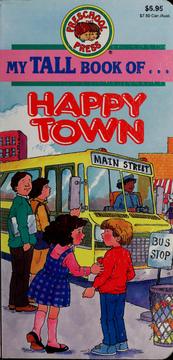
"Happy Town" is one of the shortest songs on an album of short songs. And it's interesting, because it feels like, for once, rather than go with a line or two that are just okay, or a nonsense chorus that sounds good enough, Westerberg simply decided to go minimalist; if there are few words, less chance of them being wrong, perhaps. And the result is a hard, snappy little gem which says its piece and gets out. And what's more characteristically dichotomic than a song called "Happy Town" about a place which is neither a town nor in any way happy?
The track begins with the sound of the band—or Paul and Tommy, at least—warming up and noodling slightly, in an atmospheric way, before the song proper kicks in.
And what a lead-off. Westerberg didn't lack for great opening lines, and if this doesn't quite reach the level of:
Read about your band in some local page
Didn't mention your name
Shared a cigarette for breakfast
Shared an airplane ride for lunch
You and I fall together
You and I sleep alone
Look me in the eye then tell me that I'm satisfied
Well, a person can work up a mean mean thirst after a hard day of nothin' much at all
I'll write you a letter tomorrow
Tonight, I can't hold a pen
it's certainly no embarrassment of a cousin, and the rest of the song keeps pace:
The plan was to sweep the world off its feet So you sweep the garage for the neighbors to see
The plan was to set the world on its ear
And I bet you don't know why you're here
The loose vocal triplets which lead into the chorus are an interestingly theatrical touch which adds just the right amount of musical tension, and will get more overt with each subsequent verse until it's nearly Broadwayian.
Who knew that avenue was bound for happy town
Happy town
Happy now
Happy town
Actors, authors, artists and thieves
Have afternoon parties where nobody heaves
Former strippers and junkies and men of the cloth
And we all fell in line and got lost
It's interesting to note that Westerberg seems to feel actors, authors and artists are natural peers of thieves—and that just when he was trying heroin for the first time, he puts junkies in the same categories as strippers and men of the cloth.
Who knew that avenue was bound for happy town
The plan was to set the world on its ear
And I'm willing to bet you don't last a year The plan was to set the world on fire
But it rains every day on the liar
In happy town
One of the things which makes "Happy Town" unusual in the 'Mats oeuvre is its lack of a bridge. (That and the organ solo played by fan and Heartbreaker Benmont Tench.) Not having a bridge might be one of the things which makes the song feel even briefer and lighter than its barely 3 minute run time.
The outstanding 'Mats book Trouble Boys postulates that in addition to being about Westerberg's dislike of rehab, this is a warning kiss-off to his soon-to-be-ex-bandmates—especially the "I'm willing to bet you don't last a year"—and maybe so. Maybe so. In fact, it probably is. But even more I think it's a classic example of Westerberg pointing fingers and flipping the bird to others when he's really talking to himself. Even if he didn't know it.
There have been bigger bands. There have been (sorry, boys, you know how desperately I love you but you also know it's true) better bands. But there has never been a band quite as contradictory as The Replacements.
Paul Westerberg himself once said something along the lines of there being other bands who could do the loud stuff as well as they did, and other bands who could do the quiet stuff as well as they did, but no one who could do both as well as the 'Mats. And pretending for the moment that the Beatles never existed, that seems obviously true to me.
For all their third record's "Color Me Impressed" and "Within Your Reach" were the songs which announced that the 'Mats were so very much not your typical punk band, for obvious reasons, in some ways it was actually "Treatment Bound" which announced their presence with authority.
[They themselves later admitted that their early hardcore phase was a pose, and something at which they weren’t especially good. I think they’re mistaken about how not-good they were; they may not have actually loved hardcore, but they were damn good at playing it.]
To call "Treatment Bound" a lazy shuffle would be the most understated of understatements; that it falls apart in the middle is far less surprising than the fact that they're arsed to pick it back up and finish it. And yet, for all its lyrics seem to proudly display their beer-soaked loutishness, there's actually a hint that maybe, just maybe, they're whistling past the graveyard and know it's not the smartest way to conduct themselves but they either don't know a smarter way or they're too scared to try. And one of the reasons there's that subtext is even as he's singing about getting shitfaced before the gig, Westerberg is utilizing the kind of wordplay which none of his peers would ever think of attempting, much less be able to pull off. It's that dichotomy—singing about being drunken buffoons without a high school diploma and using the language with a deftness that Cole Porter would have admired while stumbling through a perfectly crafted pop song—that made the Replacements the 'Mats.
They, of course, continued to record songs which were neither rockers nor ballads on subsequent albums: "Androgynous," "Answering Machine" and "Waitress in the Sky" becoming some of the most beloved and characteristically Replacements songs in the 'Mats oeuvre.
"Attitude" is that kind of in-the-middle song at which the Replacements excelled. Famously the only song on the album which features all four members, it starts in classic fashion, with Westerberg beginning the count-in, pausing, laughing slightly, and then rushing the rest of the count. Naturally, the entire band falls in perfectly.
It's a fine performance. Westerberg's acoustic is mixed most prominently, along with Chris Mars's drums, apparently played with brushes. Tommy Stinson's bass bumps along agreeably, while Slim Dunlap drops in sweet bits of electric guitar color throughout. It's not exactly impressive to say that it's far more polished than "Treatment Bound," but it's also considerably smoother than their classic if again not precisely Steely Dan-like "Waitress in the Sky" recording.
Well when you open that bottle of wine
You open a can of worms every time
Now you don't stop, that ain't true
Never said a word, I never had to
It was my attitude
that you thought was rude
It was my attitude
Old habits are hard to break
And I don't know how much I can take
What I think is on the tip
Of my tongue though I let it slip
It was my attitude
that you thought was rude—not me
It was my attitude
that you thought was rude
Remember sitting back in school
I held my tongue until it turned blue
They said I had an attitude
You just failed my test
'Cause I know you be the best
So wipe me off as you conclude
A POV is what I can't use
I got an attitude
Said I had an attitude
The problem is that as enjoyable as "Attitude" is, it feels like "Treatment Bound" redux, a bunch of hooligans talking about how naughty they are. But the thing is, they're not kids anymore. They're all adults now—hell, Slim's kid was nearly an adult by this point—and it's just not that amusing anymore. Now it's mainly just sad. Especially because it feels like this time they're somehow maybe even less aware of what poor decisions their poor decisions are, or at least are pretending to be. And it's all compounded by the fact that the lyrics are often individually good but don't really build to anything— just the opposite, unfortunately, as while Westerberg's personification of his own personality flaw in order to enable himself to avoid taking any kind of responsibility for his own actions is clever, in the end, the opening couplet is the strongest of the entire song is by far.
And there's one more thing which makes it a bit of an uncomfortable experience. It would be bittersweet to hear the last true Replacements recording, no matter what. But that it's this song, with its gentle musical lilt, softly sung in a professional manner by Westerberg—no hoarse shouting, no bum notes kept in, not this time 'round—featuring absolutely wonderful, tasteful drumming from Chris Mars of the exact feel and on the exact type of song Westerberg and Stinson would claim he was unable to handle—makes the entire thing a bit bizarre.
That the final 'Mats recording is so professional and polite even as they're claiming they're rebels, is a dichotomy, but not the kind at which the 'Mats excelled and which made them so damn special. It's disquieting. That it shows that Mars had far more range than his bandmates could admit is oddly disappointing, or perhaps strangely vindicating. And you can't help but wonder if the closing line—"A POV is what I can't use"—is Westerberg admitting in song what he can't actually admit to himself, never mind his soon-to-be former bandmates.
When the Beatles were recording Abbey Road's "Oh! Darling," Paul McCartney woke up every day and went to the studio and before saying a word to anyone would record his lead vocal track, looking for a certain rough first thing in the morning quality. Apparently, each time he'd lay down a great vocal, say it wasn't good enough, and come back the next day to try again, before finally getting a take he was happy with. (As well he should be, as the final result is spectacular...although John Lennon didn't think so, and thought Paul should have let him sing it. Siblings. What are you going to do?)
The title track to All Shook Down sounds exactly like that, only in reverse. The vocal sounds like it's about 3:15 in the morning—or maybe even 6:30 a.m.—and the singer hasn't gone to bed to yet; after a long day's night, he's the last man standing, and he's too wired to go to sleep, even if he's absolutely exhausted. And so what can a poor boy do except sing a tender dirge?
Apparently, that's just what Westerberg did. He laid under the piano in the studio and sang snippets out of a notebook. Which is how you get this glorious mess that will often almost seem to make some sort of profound sense and then suddenly veer off into near Joycean (or at least Edward Lear) gobbledegook...and yet. And yet throughout it retains a remarkably gripping power. Because while the vocal style is reminiscent of McCartney's technique from 20 years earlier, the lyrical technique prefigures Kurt Cobain's writings, especially those which would shortly change the world, in a mere 369 days.
Like Cobain, Westerberg has an ability to take an arresting line—or even a phrase or just pair of words—and explore or, more often, juxtapose them against another equally interesting combination of words having nothing to do with the first and yet somehow all the richer for being limned against each other. Often impossible to parse in a literal sense—although delightful to try—there's a certain energy that comes along with something non-linear that in some way manages to speak directly to the heart.
It's a deceptively difficult way to write; plenty of composers attempted to write whimsical lyrics in the aftermath of Bob Dylan's breakthrough, or John Lennon's "I Am the Walrus" period and few (virtually none) succeeded, and the rock landscape was littered with sad grunge wannabes in the wake of "Smells Like Teen Spirit" who thought all that was needed was to put some absurd emo babblings together and emote embarrassing and rock immortality would be theirs. They eventually found out it was not to be, quite a bit after the rest of us realized it.
But not Westerberg. Several extremely large steps above most good writers, here even hung over and strung out, he manages to string together a lyric whose meaning simultaneously flutters just out of reach and takes permanent root in the listener's soul. All while going back, again and again, to a typically Westerbergian piss-take, different in absolutely every way imaginable, on one of the King's most famous hits. And, again, in oh so Westerbergian fashion, he takes elements of his own life—in this case, the fact that he was at that exact point experimenting for the only time in his life with heroin—and combines it with exaggeration and surrealism and produces gold.
Hollywood cops shoot each other in bed
And I wouldn't go to see 'em they put the checkbook to my head
Tinkertown liquors and emperor's checkers
Some shit on the needle, like your record
The fifth gripping week an absolute must
One of the year's best ain't sayin' much
Throwin' us trunks as we're starting to drown
We're all shook down
She don't do dance and she don't do us
The black and white blues oh yeah I got 'em in color
The fifth gripping week an absolute might
One of the year's best in sight
They throw us trunks says we're starting to drown
We're all shook down
Praises they sing a register rings
One of the time that nobody brings
Praises they sing shake my hand as I drown
All shook down
The impact of the recording itself cannot be underestimated.
The woozy feeling is clearly genuine, from Westerberg's barely-loud-enough-to-be-considered-a-whisper vocals to the tape loop of his breathing, to Steve Berlin's delightfully creepy yet lovely ocarina, it's one of the most fully realized tracks on the album even as it seems on the verge of collapse at any second.
All Shook Down comes across as a mishmash of songs loosely connected by a theme of disillusionment and ends. Some of the songs work absolutely perfectly, whether they are rockers, semi-ballads or deathly quiet meditations. Others don't quite work so well, lacking something that used to seem to come so naturally to the band. I wouldn't say there are any bad songs on All Shook Down, just some that aim for a mark with which the Replacements have always been so used to hitting and, well, they just miss.
Not "When It Began," today's installment. To me this is the Mats firing on all cylinders as a power pop band, a final callback to one of the things they did best over the final 5-6 years of their career when they got a little more serious about making truly great songs. This one falls into a category with "I Will Dare" and "Kiss Me On The Bus" and "Alex Chilton" and "Valentine" and "I'll Be You" and "Achin' To Be" and more. It's not as rough as some of the earlier stuff, nowhere near as loud as classic rockers like "Color Me Impressed" or "Favorite Thing." But it's alive, it's fun, it's edgy, it's perfectly written and, maybe more than any song on the album, it shows maybe where the band could have gone had they kept it together.
With its country jangle that would have made R.E.M. proud and may have even given Wilco some ideas way back when, "When It Began" is fully bathed in this pop glow the band so often could trot out and give the what-for. It sounds light but it's really not; there's a touch of menace underneath the somewhat unorthodox chord progression. It bounces along but it's got enough teeth to leave a mark, and the heightened pace is cheerfully juxtaposed against (where have we heard this before?) lyrics that are anything but. And it paints quite a telling picture of where the Mats were when they pressed "RECORD" on this track.
Stop at a light that shined bright blue
And where you been is still in view
You stopped at nothing at your first chance
Now it's nothing like when it began
Long ago, or yesterday
The queen sits quiet, the jester plays
She plays, "Off with their heads and on with my pants"
Oh it was something when it began
Oh and nothing? That's something I understand
I'll dance to try and make you laugh
I'll play the fool, the king at your command
Oh yeah - HEY!
I never had to bow to you when we began
And I can play you a tune at your command
Oh, and if you say nothing, well that's something I understand
When it began
When we began
When it began
Okay, Paul. I guess goodbye to you, too.
Most bands don't intentionally tell people they're done in song. Sure, some did it with much acclaim and fanfare. The Beatles left fans with the entire second side of Abbey Road, little snippets of this and that which rolled into one huge suite that was irresistible and unforgettable. Cream had an entire album called Goodbye which, well, showed why breaking up was a good idea. Other great bands just walked away (The Police, R.E.M.) or came to a screeching halt (Nirvana, the Sex Pistols) without much adieu. But the Mats did say goodbye to each other, to fans, to the label, to detractors, to rival bands and to anyone else who mattered on All Shook Down. And the true farewell is found in the form of "When It Began," and a chance for Paul to get a bit nostalgic while still unleashing at least a bit of venom one final time. And it works just beautifully.
Paul brings out all his tricks for "When It Began." The absurdities (a traffic light being blue?), the humor ("Long ago...or yesterday"), the word games ("Off with their heads and on with my pants"), and then he wraps it up with a line for the ages, one which may define the Mats in their final incarnation as well as "Swinging Party" did ("If being afraid is a crime we'll hang side by side") in their heyday.
"If you say nothing, well that's something I understand."
Is that or is that not the Replacements in one damn little nutshell? A band so often paralyzed by the idea of success, so terrified that making a career turn that seemed right could lead them to ruin, that they so often just said "Fuck it" and skidded off the highway. Nothing could have changed that about them, it was in their DNA. And as Paul tells us at the end, nothing is probably the one thing they have always understood. Brilliant.
Like "Can't Hardly Wait" with its horns and stops and Chris' delightful fills, or "Talent Show" with its breakdown and shades of "Portland" at the end, there are so many little touches in "When It Began" that make it great. I've always loved when Paul and others yell "Hey!" at the peak of a song (think "I'll Be You" or "Valentine" or, a few tracks earlier on All Shook Down, "Nobody"), and we get that here too. The slide solo is a new touch (it's Slim, right?) that ups the lite-country factor by a bit and creates this breezy feel that crackles with energy. The band (whomever they may be) singing backup on the outro really does sound like everyone saying goodbye. And those little moments of defiance from Paul that tell us yeah, we're having fun here for now, but don't push me ("I never had to bow to you when we began") is a cool reminder of how tension was such a necessary part of the band's formula.
And finally there's this. Paul always seemed to have high expectations of his fans; he wanted them to truly listen, and listen right to the end. It's why a song like "Favorite Thing," while it seems to ultimately careen into a kind of sweet sentiment at the bridge ("You're my favorite thing, bar nothing!"), it emerges after Bob's gonzo solo with a terrific punchline, "My favorite thing...once in a while.") It's why at the end of "Achin' To Be," after three minutes of describing this unreachable mystery girl, he lets us know who he's really talking about ("...just like me.") It's why as Scott pointed out a week or so ago, he saves one hell of a kicker for the end of "Nobody" (You're still in love with nobody, and I used to be nobody. Not anymore.") Paul doesn't mind making us wait to get the full story; it's the mark of a great songwriter to expect as much of the listener as he or she does of him or herself. Joni Mitchell did it. So did Bob Dylan. And so did Paul Westerberg.
So that's why at the very end he makes it clear he's not talking about the band as some third-party vessel that he is all at once nostalgic for and fed up with, but he's really talking about them. The four of them. Or five of them including Bob, who by this point had been gone for five years. He sends a message not just to the band known as the Replacements, but to the specific members, his brothers for the past decade. How does he do this? Like this:
When it began
When we began
When it began
The "we" makes all the difference in the world and personalizes it in such a way that makes "When It Began" fully realize its lofty vision. It says goodbye and good riddance at the same time. It looks back fondly and scoffs at the past at the same time. And it remembers not only what the Replacements were, but who they were. Bravo.
Because after all, Paul was dead on, and never more right in his career, when he sang this line: "Oh it was something when we began."
For so much of his time with the Replacements, Paul Westerberg was not only the man largely in charge (being the songwriter, singer and frontman will do that to you), but a man on the move. He was so often in motion, always traversing the lines between hither and yon, plotting his next move. The question was, where was he heading? I'm not sure he ever really knew because the direction seemed to change so often.
Let's take a look.
First he was a thrash-happy scoundrel who seemed content to scream out rippers like "Something to Du" or "Kids Don't Follow" all the live long day. Until he wasn't, and he just had to try his hand at "If Only You Were Lonely" (funny how that song keeps coming up, and I swear it's not intentional) or "Within Your Reach." Only he didn't want to be a solo act back in those days; he wanted the band to evolve. So he marched them through the rowdy insouciance of Hootenanny with songs that took them off the funny pages (at least a bit) and into the realm of something deeper. That's where "Color Me Impressed" and "Willpower" came from, even while leaving the door open for the band's riotous side with songs like "Lovelines" and "Treatment Bound."
But still he (and the band) moved on, and Let It Be brought Paul (and the band) on another stunning shift of direction into full-on confessional songwriting, and if anyone can find the equal in terms of that album's postpunk, heart-on-sleeve brilliance, well, please let me know. Because that would be impressive. Who could have foreseen the band that did "I Hate Music" and "Customer" cranking out splendor like "Unsatisfied" and "Answering Machine" and "Sixteen Blue" and "I Will Dare" less than three years later? While still blowing the doors off with "Favorite Thing" (quick side note: that is a PERFECT song) and "Gary's Got a Boner?" And again, they seemed to move to this point in large part due to Paul's inability to sit still. Fear and loathing aside, he just had to keep moving and, in his own way, evolving.
The journey and changes kept coming. First was a new label with Tim and a foray into outright anthemic classic rock (with punk leanings of course) with the one-two punch of "Bastards of Young" and "Left of the Dial." Followed by the momentous decision to kick Bob Stinson out of the band, led largely by Paul and obliquely chronicled (at least I hear it that way) in one of the most important songs Paul would ever write, "Swinging Party," which seemed a farewell to the Bob years and the advent of the next phase.
Next up, more change with the decision to go it as a straight-up trio and truly stretch their legs on the brilliant, genre-bending Pleased to Meet Me. Then, of course, the move to bring Slim Dunlap into the band for Don't Tell a Soul and to try (unsuccessfully) for that long elusive hit. Then the next course correction was Paul's decision to finally go it alone, after more band strife and the somewhat disastrous tour opening for Tom Petty in 1989. Or so we thought, Because then, of course, another turn! In the form of the final U-turn into putting out one final Replacements record. That's what led us to All Shook Down, a decade-long path that had more loops, deceptive turns and illusive twists than an Escher painting.
Sure, the band took this journey and made these directional changes with him, and you can draw a pretty clear line on the band's evolution of sound. But the unique path to get there was pretty palpable. And, naturally, someone had to be in charge. Or, if you will, someone had to take the wheel. So Paul did.
So look where that brings us! To track six of our look back at All Shook Down, the perfectly entitled "Someone Take The Wheel." Almost like we planned it that way. And also known as the moment Paul finally and most plainly announced he was publicly surrendering his leadership role in the Replacements.
"Someone take the wheel, 'Cause I don't know where we're goin'. Anybody say what you feel, Everybody's sad but nobody's showin'."
Do I know that for a fact that Paul is announcing this is the end for him? I do not. But the signs point right at it. Look at the words, starting with that chorus. It sure looks like, just after Paul's at-last plea to his fellow bandmates to please take the reins from him, the next line comes as a tacit admission: "'Cause I don't know where we're goin'." (Later in the song changing to the even more revealing, "'Cause I don't care where we're goin'.") After a decade of steering the band this way and that, towards success and then at the last second, time and again, diving into a ditch to avoid it, after getting rid of Bob, bringing in Slim and pretty much leaving Chris by the roadside, Paul's done. 10 years. Eight albums. That's it. Game over. Someone take the wheel.
So it's an important song in the Mats catalog, at least it should be, for that reason alone. And it feels like the Mats doing their thing. The shouted count-in from Tommy. The profanity and the nihilism ("I see they're fighting again in some fuckin' land..."). The peerless wordplay ("Anywhere you hang yourself is home"...holy shit is that good!). The noodly guitar solo that seems to balance between country jangle and wickety-wickety pop metal. The overall exhausted pace and the somewhat off-kilter bridge that doesn't seem to want to fit but still does. Plus a nice harmony turn towards the end from old Brit rocker Terry Reid. It's all there on "Someone Take the Wheel." The ingredients for a classic Mats ramble are all there.
Which is why I only wish I loved it more.
I mean, I like it. It's a decent song. And if the Goo Goo Dolls or Bush had done it it would be close to the very best of their catalog. But with the Mats, as Scott and I are learning as we do this exercise, you grade on a fairly steep curve. Especially when royalty like "I Will Dare" and "Can't Hardly Wait" and "I'll Be You," to name just a very few of the many perfect rockers they gave us, are always in the mix.
Here's my issue. This should sound like a Mats song for all the reasons I mentioned above, but it doesn't. And it doesn't really sound like a Paul Westerberg solo project. Instead, and maybe it's just me here, but it sounds like a band that is trying to sound like the Replacements. Which is why it just doesn't ever fully work for me.
The Mats never really tried to sound like anyone else. Sure, they on occasion could evoke Big Star or The Heartbreakers or the Dead Boys or even the New York Dolls, but the sound was still always theirs and theirs alone. But on "Someone Take the Wheel" it sounds like they are trying to ape the band they once were. The fact that only Paul and Tommy play on it could have something to do with it, and recapturing the feel the four of them once had with two non-Mats in the room, well, that ain't easy. So there's a level of involvement, a chemistry issue perhaps, that's just missing. And despite some truly fine moments within the song, the end product is just something a little less.
It's not to worry, because they'll get that...that something...back again before the record ends. A few times, actually. They will recapture exactly what it was that made them great, and as a result there will be more great songs coming, and very soon for that matter.
But on "Someone Take The Wheel," the song where Paul finally seems to stop moving and, perhaps, toss it in, the machinery is in place, but the results just don't quite add up. For the first time on All Shook Down we can finally see not only that the end is near, but perhaps why it's near.




 a
a



:format(jpeg):mode_rgb():quality(90)/discogs-images/R-14598213-1577898972-1274.jpeg.jpg)