Friday, October 5, 2012

It's a Tragedy

So much bad music. So little time to mock it.

OK. As always I overstate. There is so, so much good music out there, in so many shapes and sizes and colors and forms.

But let’s face it—there’s some pretty bad dreck out there too. After all, John Mayer and ABBA are still working.

Again with the trashing of those two? Don’t you have better things to complain about, Dan?

Sure do. Because the type of song I am thinking about today was a particularly noxious genre, one that mercifully largely died out before either of us were born, yet still bubbles to the surface every once in awhile. Or at least did. Fortunately, with one remarkable exception (that to come later) the genre largely ceased to exist by the mid-70s.

I am talking about what was known as “The Tragedy Song.” Not songs about tragedies, mind you. Because there are too many wonderful tunes that deal with death and tragedy to really list here. But the list would certainly include “The Lonesome Death of Hattie Carroll” and “For a Dancer” and “Wreck on the Highway” and even “Ziggy Stardust,” songs that all deal with tragic events and examine them through a lens of anger, regret, fear and the rest of the honest emotional spectrum. Many other examples of really good, really sad songs abound.

That’s not what this is about.

The “tragedy song” was a fad at the turn of the 50s into the 60s, and involved a perfect little story of a perfect little couple so totally and hopeless in love with each other. Only then, one of them dies. End of story.

Only it’s so not. Because here’s the thing—in every one of these songs, and mercifully there weren’t that many of them, but just enough to make it a legit fad—the way in which the person dies is so mindbendingly horrific and irredeemably stupid that the listener really can’t help but laugh at the idiocy. And what’s more, the songs are cloaked in layers and layers of maudlin sap and whiny pap. We’re kinda glad the person is dead because it means the song will soon be done, and we wouldn’t mind the narrator joining the dead love.

My dad was in college during this era and he has confirmed that, yes, these songs were huge and, yes, these songs were ridiculous. He even has a very funny story of a piano player in his fraternity house who turned one of these songs into a rollicking barroom singalong, which always got the room howling. Good!

Case in point is the Mt. Rushmore of musical tragiporn, “Teen Angel” by Mark Dinning in 1959. The couple is soooo very in love and soooo happy. Until one night when their car stalls on some railroad tracks, and a train is bearing down on them. They get out safely, only the girl goes running back and promptly gets crushed to death by the train barreling down the tracks. And why did she do something so stupid?

It really is kinda hard to believe.

What was it you were looking for?
That took your life that night?
They said they found my high school ring
Clutched in your fingers tight.

She ran back to get his high school ring. Which apparently meant so much to here she wasn’t even wearing it at the time!

Somewhere Charles Darwin heard this song—although only if he’s unfortunately in hell, which I doubt—and smiled, nodding. Survival of the fittest is working like a charm.

The song went to Number 1.

Then there was Ray Peterson’s “Tell Laura I Love Her” a year later, which went Top 10, although not to the very top, mercifully. Once again the couple is deeply in love, happy and smiley and ready to live forever. Only Tommy, the hero (for lack of a much, much better term), can’t afford to buy her an expensive wedding ring ($1,000!).

So he does what any sensible young man would do. Finds a cheaper ring? No. Gets a job to pay for it? No. Takes out a loan? Buys it on layaway?  Borrows from his parents??? No, no and NO, Mitt!!!

No, he does what any sensible young man would do. He enters an auto race to win the $1,000 first prize. You really had to ask?

What happens? C’mon, you know what happens!

No one knows what happened that day
How his car overturned in flames
But as they pulled his body from the twisted wreck
In his dying breath they could hear him say
“Tell Laura I love her…”

Also? Tell her Tommy was an idiot and she’s probably way, way better off.

There's plenty more, unfortunately.

In “The Last Kiss” (covered stridently decades later by Pearl Jam) awful driving is again the cause, this time the girl dies because her lover somehow couldn’t see a stalled car in the road up ahead. More bad driving takes the guy in “The Leader of the Pack,” which actually is quite musically enjoyable in the hands of the Shangri La’s, if you overlook the general overwrought silliness of the lyrics.

In Pat Boone’s hideous “Moody River” he arrives for a date to find out that his girl has inexplicably killed herself. Although she was dating Pat Boone so, well, I repeat myself. And in “Patches,” a girl named Patches kills herself and leaves her lover so very sad that Patches is dead. And gives no real reason. Although it possibly had something to do with her parents naming her “Patches.”

Again, it’s not that these are sad songs. Tons of amazing sad songs have been written over the years, ones that stay with us forever. It’s that these are melodramatic little soap operas, designed to lose us in the all-encompassing crippling gloom and not just tug at our heartstrings but to freaking tear the suckers out of our chest. They come with all the subtlety of a Yanni keyboard solo, and they are obnoxious in their efforts.

Fortunately, the trend began to die out by the mid-60s; maybe because the Kennedy assassinations and Vietnam War gave us real things to worry about. Or more likely just because the trend had run its course, just like disco did in the late 70s and glam metal would in the late 80s. (Both of which are preferable musical genres, BTW—yes, even glam metal).

But every once in a while the tragedy song would rear its ugly head again. Bobby Goldsboro’s “Honey” in 1968 may very seriously be the Worst. Song. Ever. So misogynistic and manipulative and craven in literally every little awful corner of it. “Seasons in the Sun” in the early 70s is so whiny and intentional it leaves us openly rooting for the guy to die by the end of the song. And “Billy Don’t Be a Hero,” well, it's to anti-war songs what Karl Rove is to hip hop.

But, and here comes the big twist I have so clearly telegraphed, there is one song—released in 1992—that returns all of the conventions and pitfalls that once shaped the classic “tragedy song” motif. And actually works well.


Richard Thompson delivers beautifully with “1952 Vincent Black Lightning” because the song is what all those other songs are not—unsentimental, unflinching and unapologetic. James the Bad Guy knows he’s a bad guy and doesn’t care, much like the narrator of Eddie Cochrane’s legendary “Summertime Blues” (in my estimation the first true punk rock song) knows he’s a lazy little bastard but still doesn’t care.

What’s more, James’ love—the lovely Red Molly—knows he’s a bad boy and doesn’t try to change him. She accepts him and his fate, come what may. Plus she gets a really cool bike out of it, something that the corpse girl in “Teen Angel” was never able to promise her fella!

And then of course there is that mesmerizing acoustic guitar work that Richard tears through, so intricate and precise. It’s as good as an acoustic guitar can sound; so much harder than most ballads, yet still soft enough to create a lovely and singable tune.

So thank you, Mr. Thompson, for bringing a forgettable motif back for one final go-round, only finally doing it right.  No sap, no pap, no tears and very, very little human idiocy. Plenty of bad behavior, sure, but at least it’s acknowledged.

Let’s just hope Red Molly wasn’t killed by a runaway train on her way home. Or died in a hastily arranged motocross race.

Wednesday, October 3, 2012

Bastards of Young

With the news that Paul Westerberg and Tommy Stinson got together and recorded an EP to raise money for their fellow ex-Replacement Slim Dunlop's medical bills, old, vintage 'Mats videos were posted like, well, like a Replacements semi-reunion was in the offing.

The problem is that unlike their friends and peers R.E.M., there's very little professionally-shot live footage available of the 'Mats in their prime. There's a fair amount of amateur stuff but it's...well, it's even more hit-or-miss than the Replacements were live.

Here's an exception. Much, maybe all, of this 1989 concert seems to be up on YouTube, and although it's from a hand-held camera, it's certainly watchable and the sound is surprisingly good. But it's...well, it's live Replacements. Which means for a lot of it they seem to be bored, listless, even when playing then-new songs like "I'll Be You" or covering killer tunes like "Another Girl, Another Planet."

But then there's this. Rather than getting bored halfway through—or even earlier—the band picks up speed as they go, coming out of Slim's solo like rabid gorillas, tearing through the last verse and final chorus. Tommy appears coolly ecstatic in his Kinks outfit, Chris Mars is pounding away behind them vengefully and at one point it looks like Westerberg's playing his guitar so hard he breaks a string, and rips it away before going right back to punching the chords again.


And you watch this and you just think...dammit. If only. If only. 

Monday, October 1, 2012

God's Comic

STORY IDEA! Quick, Scott, take this down!

(Scott shakes head, backs away, runs out door and across parking lot)

Fine, I'll do it myself.

Anyway, the story. God is fed up…and seeking revenge!

That’s right, this is a story of God hisself (or herself, but for arguments sake and to true everything up with what comes later, let’s say hisself. Or Hisself, I guess) looking to get back at all the peeps who have royally fucked up His world.

Like for realsies get back at them. Not just frogs and boils and all that jive that has totes been done before. No, this God is comin’ hard for their souls, stalking all of us ungrateful bastards like a steroided up Omar Little of The Wire.

Fun idea, no?

Even more fun. God in this story isn’t replete with the flowing beards and the glowing and the choruses belting out “Hallelujah” behind him. He won’t even look like George Burns. Or Alannis Morissette. (I’ll leave Morgan Freeman out of this one, because we all know if He is in fact a He, he looks just like Morgan Freeman.) But, no, this God will be kinda tacky. Like waterbed tacky. Like Andrew Lloyd Webber-listening tacky. The kinda Guy who enjoys reclining with a trashy paperback and drinking off-brand cola. It’ll almost be like the Real Househusbands of Heaven. Or mayhap the Republican National Convention.

So that’s what God will look like in this story.

And what’s His plan? How will he get back at the world for all of the upfuckery?

Oh, it’s a sinisterly delicious idea. He appoints a gatekeeper—St. Peter is getting far too old anyway at this point—someone who will have 100% of the authority over Whose Soul Gets Saved and Whose Soul Gets Sent to H-E-Double Hockey Sticks. One dude will own all that awesome power. Just one. Forever.

Only. Only it won’t be no Captain America-Steve Rogers-flag-saluting-squared-jawed-church-every-Sunday-Golden-Boy motherlover, neither. No, God’s Self-appointed sole arbiter of Who Gets Saved is going to be a lousy, shiftless, lazy boor of a drunk, the worst souse you ever stepped over in the gutter on your way to pee against an alley wall. This disgusting, drooling little waste of human oxygen is going to be God’s Bad Cop. And if you want to get into heaven, you gotta get through him.

Kind of a crazy little story, no? But isn’t it kinda one you may want to hear? Or at least have someone try and tell it?

Dear Dan—Will you get to the point please? Love, Dan.

Well, you’re in luck. Because this story exists, in songform. And it only takes a little more than five minutes to tell, with an acoustic shuffle that ticks along like a drunk taking a stroll in the park, backed with a glompy brass band and a fun little snare to keep it on track. And it works magnificently.

Because it was written by Elvis Costello, as part of his deliriously perverse 1989 solo effort Spike.

It’s called “God’s Comic.” And in a canon of exemplary material he’s been churning out since 1977, it still stands out as one of his finest hours.

Here. Have a listen. And don’t worry; it’s not what really awaits us on The Other Side.

(We think.)

Saturday, September 29, 2012

Sweet Dreams/Blue Monday/I Feel Love

Good Lord. Would that this had actually happened: Donna Summer fronting New Order would have been maybe the greatest supergroup of all time.

Friday, September 28, 2012

Imprinting

Imprinting is a funny thing. When DT and I were in high school, every year there'd be ducks that would come and nest and lay eggs and raise little ducklings. You'd be trying and failing to concentrate on, say, trigonometry because there'd be a momma duck leading a row of ducklings around the courtyard right outside the window and how on earth could trig compete with that?

(Also, you lost all respect for your very nice trig teacher when she mentioned that René Descartes was not only a mathematician but a philosopher and his most famous insight was the saying, "I exist, therefore I am," and you looked around the room, slack-jawed, and saw all the other students writing that down and wondered if you were the only one who'd watched Monty Python sing "The Philosopher Song" and how was it possible that Monty Python were a more reliable teacher than the very nice woman who was paid to teach trig at your high school and yet the evidence was inescapable?)

Every year there were strict warnings, more from the fellow students than the teachers or administrators, not to touch the ducklings, no matter how adorbs they were, as if you did, the mother would from that point on refuse to have anything to do with the duckling, as the slightest touch of a human would embue it with the human's stench forever and ever and it would die a horrible death of starvation and neglect. Years later, I was told that such a horrific scenario was not, in fact, true. Be that as it may, the result was that no one, as far as I know, ever did actually touch one of the ducklings. (Although, yes, it is possible one young jackass jumped out the chemistry window and tried to catch a duckling but found the little bugger too fast and yes he was kinda relieved to fail at least that one time.)

We've all seen the videos of ducklings or goslings or whatever having imprinted upon a creature that's clearly not its mother—another kind of bird or a deer or a person or a scooter or whatever. It's a real thing, something which isn't news to most music fans.


Hey! Hey! DT! Check it out! A new live Bruce album! Yeah, another one! I know! Isn't it great?! Let's go get! Oh, wait, I think it's over here! No, no, it's over here! It's over there now!

What we first liked or at least first heard tends to have a long and lasting impression upon us. Even if we later grow out of our, say, Barry Manilow phase, there's often a lingering fondness for his fluffy cheese (ew) that never quite dissipates entirely. Or we find ourselves so sick of and turned off by an early love (hello, Doors!) that you very much run in the other direction. Either way, those earliest impressions make a big impact on us and our development.

Which can make objective listening a difficult thing. A good friend, hearing some later Elvis alternate takes without the huge backing choirs and strings, wondered why he always preferred hearing songs stripped down. Part of it, maybe most of it, I think, is the simple novelty factor of hearing something as familiar as "Suspicious Minds" in a new way (and also too, admittedly, much as I love the official release, more and clearer Elvis does tend to be better Elvis to my ears).


This is why I often prefer hearing R.E.M.'s "Finest Worksong" in one of its alternate mixes, with the cool guitar intro and horns. Meaning, if we only knew the barebones version of "In the Ghetto," would the full orchestral version be spine-tingling or would it seem hopelessly overwrought? (I love both but if forced to choose would instead eat a downy little baby duckling.)


And so "Talent Show" by the Replacements. I loved the official release from the first and all these decades later still love it. But it's hard to deny the power of the original studio demo. The question I can't answer is, if this was the version I'd imprinted on, would the official version seem terribly soft or would it feel as though a rough masterpiece had finally been brought to completion.


As the boys themselves said on the previous album, I don't know. I understand why they did what they did and I think, conventional wisdom be damned, it was a fine idea and done quite well indeed, commercial failure aside. But it's hard not to feel something was lost in the process and impossible to know how I'd feel if the order had been reversed.

Thursday, September 27, 2012

Small Blue Thing

Suzanne takes your hand. And she leads you to the river.

OK, maybe Leonard Cohen's Suzanne did that, but not Suzanne Vega. Though the lovely and brilliant Ms. Vega does take us somewhere with her quirky and exquisitely crafted songs and stories. And that somewhere is always impressive, whether she's wearing rags and feathers or not.

Scott and I have talked a lot about Suzanne over the years, and admittedly he knows infinitely more about her than I do. But I still love her stuff, her voice, her meticulous attention to every word she sings. And on more than a few days I put on one of her albums and soak in the wondrous artistry.

Today was one of those days, on the drive into work. And the album was her first. And the song that stood out today was "Small Blue Thing," the musical equivalent of a perfect little piece of blown glass. Delicate, singular, complete.

Today I am a small blue thing
Like a marble, or an eye
With my knees against my mouth
I am perfectly round
I am watching you

I am cold against your skin
You are perfectly reflected
I am lost inside your pocket
I am lost against
Your fingers


Very few people can write lyrics like this - it's like an extended haiku, deeply personal and oblique and laden with sharp, focused images. And what I admire is how confident Suzanne was that they would work as lyrics, how wonderfully they would play against bell-clear guitar notes and how they would spring to life in her wholly unique voice.

Here's a terrific live performance that really does demonstrate the fragile, specific beauty of "Small Blue Thing."

Monday, September 24, 2012

Moonlight Feels Right

Indeed it does.

I make no apologies for my unfettered love of cheesy 70s Top 40. I was a kid, so there's the sentimental element, and surely (hopefully) that's the strongest pull, but I'm also, at heart, mainly about melody, and that's something that, for better or worse, it pretty much all had in spades. And lyrics have never been my primary concern, which is very, very important when listening to 70s Top 40. What's more, a surprisingly large bit of it was surprisingly funky and, I mean, come on: melody and funk? I'm so there.

This is many things but funky is not one of them—not unless you're talking about the fashion sense.


Oh 70s. 70s 70s 70s. Just...no. No. No.

GOD. Those little laughs at the very end of each verse is so stalker who wants to get caught...but not. quite. yet.

Never mind the smooshing of the word "Chesapeake" into two syllables.

Never mind the line
I finally made a tricky french connection
You winked and gave me your ok
Never mind the line
The eastern moon looks ready for a wet kiss to make the tide rise again
You could even never mind the line
I guess you know I'm givin' you a warnin' 'cause me and moon are itchin' to play
Although the cumulative effect of all that greasy sleaze is to make the guy seem slightly less like a low-grade stalker and slightly more like an actual active serial killer at work.

But just as much so...the look. That just was not a good look, mister singer man. It's not shocking, when viewing this, that the band didn't go on to another dozen smash hits.

On the other hand, the singer's look is certainly way better than the marimba player who solos at 1:47—I think I caught something from merely watching him. I mean, what are the odds he didn't drive a van with an airbrushed painting on the side, shag carpet inside, and a sign saying "If the van's a-rockin', don't come a-knockin'!"?

Having said that, he really does rock that marimba pretty hard, I must admit. But I think I counted three keyboard players in the band, in addition to the marimba master, and I must say, that seems like maybe just the eensiest bit of overkill, considering what other bands, such as, say, The Band, were able to do with a mere two.

Monday, September 17, 2012

Broken Chairs

I was late to the Built to Spill party, as I've been late to pretty much every party since about 1990. But the first time I played Keep It Like a Secret, having little idea what it or they would sound like, we clicked instantly. They're one of those bands that I think I would have bonded with down to the roots of my soul (do souls have roots?) had I first heard them when I was a teenager.

But "The Plan" grabbed me from the first, and then "Center of the Universe" absolutely sealed the deal. The rest of the album veers from the merely wonderful to the absolutely fantastic. But it's the final song, "Broken Chairs," to which I return again and again. The opening is cool enough—a couple Hendrix-like licks followed by a sort of blues rock jam—but gives little hint of the maelstrom to come.

It's nearly a minute before the real song begins, although there's no way to know that the intro is just that, merely a cold opening. But when it moves into the minor and songwriter Doug Martsch starts singing it crosses into an entirely new place. A verse, some guitar and then, oddly, whistling.

And that's it. No chorus, no bridge, no breakdown, no turnaround. The whole thing just repeats, essentially treading this same ground musically again. Lyrically, it's...I don't know even know, as mere snippets of words appear out of the murk, evocative phrases such as "my head's a dictionary of long spring days and the speech of crows who themselves are mirrors of apprehensions" or, the only really clear phrase, repeated several times, "well, all right."

But that's not the point—or maybe "well, all right" is the point. The point is howling guitars howling over a circular chord structure played by howling guitars which speak more eloquently than any but the very finest lyrics are likely to be able to. And, well, that's very all right indeed.


In the fallen sun...well, all right. 

Saturday, September 15, 2012

The Sad, Strange Case of John Fogerty v Neil Young

So I’m watching Hard Rock Calling 2012 and I’m hit all over again, as I am not infrequently, with the thought: how great is John Fogerty?

I mean, pretty much any way you slice it, the guy was the real deal, the complete package: phenomenal writer, great guitarist, distinctive and effective singer, rock-solid producer, and prolific as few others have ever been. How great was John Fogerty? So great that this boy from the Bay Area made most folks really and truly believe, without even trying, that he was from the deep south. How great was John Fogerty? This great: he not only wrote a song with the word “chooglin’” in the title, he then went on to sing the word in the song nearly seventeen thousand times—and he almost made it work, even. Oh, and in his spare time, he casually invented the grunge look 20+ years ahead of schedule.


Creedence Clearwater Revival released a stunning seven albums in under four years—but even that’s deceptive, as the final album was a thrown together mess released after what was, for them, a crazy long quiet period of nearly a year and a half. In other words, just looking at what could be considered their middle period, CCR released great five albums in two years. That is, to quote the great Luke Skywalker, highly unlikely. And yet.

From CCR’s first (of three!) 1969 album, Bayou Country, with “Proud Mary” and “Born on the Bayou” to their second 1970 album, Pendulum, with “Have You Ever Seen the Rain,” Creedence’s run is virtually unsurpassed. And with Fogerty writing and singing the overwhelming majority of the band’s output—as well as producing, playing the guitar solos, the keyboards and even the damn horns—this was very clearly his band.

And then it was over. CCR broke up acrimoniously in 1972. John Fogerty released a pair of solo albums that were pleasant enough and then he disappeared, reemerging with a new album in the 80s, a record that at the time seemed like a glorious return to form but which hasn’t aged terribly well. He’s released a few things since then, but nothing that can even approach his glory days.

And it’s an incredible shame. A shame of almost unparalleled proportions in rock and roll.

Is that overstating the situation a bit? Well, let’s put it like this: consider another rocker, almost exactly the same age and who came up at very nearly the same time.

In a bit over five years, from very late 1966 to early 1972, Neil Young released seven albums: three with Buffalo Springfield, ranging from okay to great—and on which he wrote only about a third of the songs—and then four solo records, ranging from good to great. Like Fogerty, Young wrote, sang, played and produced. Unlike Fogerty, Young was in not one, but two bands, and left both because he was too strong a presence and too determined to do his own thing to fit comfortably within the confines of a band, an organization which by design requires a certain amount of compromise.

Think about the solo career Neil Young has had. From the commercial success of Harvest to the dark night of the soul that is Tonight’s the Night. From the apocalyptic scenarios of On the Beach to the gentle country-rock of Comes a Time. From the gutbusting crunch of Everybody Knows This Is Nowhere to the more subtle explorations of After the Gold Rush. From the I’ll-see-your-punk-and-raise-you blistering of Rust Never Sleeps to the live exploration of his back catalog with the same focus of Live Rust. And that’s just his output of the 70s.


Since then he’s gone on to release records which, improbably yet really do, equal his best work, albums such as Freedom and Ragged Glory. He’s had more than his fair share of failures, but to be sure, but most of those came from a surfeit of ambition, and if you’re reading Reason to Believe, there’s a better than even chance you’re as big a fan of the noble failure as we are.

So. Two guys with similar musical background come up at the same time with the same skill set and find roughly equal commercial and critical and artistic success. One of them goes on to hit even higher heights while the other just sorta…fades away. Sure, he still tours and he still sounds pretty darn good and from time to time he'll even release a new album. But compared to his initial four year burst of supernova-like power, well, to misquote the great Stevie Wonder, he hasn’t done nothin’.

That’s harsh but it’s also unfortunately true. And don’t get me wrong: anyone who created “Green River,” “Fortunate Son,” “Bad Moon Risin'” and “Who’ll Stop the Rain” can rest with complete and total comfort on any laurels they want—that’s an oeuvre right there of which anyone could and should be insanely proud, the kind of catalog most very good artists would sell their souls to be able to claim after a lifetime of hard work. That Fogerty did that at all means he’s earned every right to consider his work here done. That he’s got twice that many again that could easily have been named is just mind-boggling.

And yet clearly he himself doesn’t feel that way, otherwise he wouldn’t have released as many solo albums as he has over the years. He’s tried to equal or top his best work, and good on 'im for doing so. And the result is that he hasn’t even made it out of base camp, much less summited again the very peaks he used to scale so effortlessly.

Why not? Who can say? People are complex and people are a mystery. Some just burn incredibly brightly and then are done, like (to switch to sports) Bo Jackson. Some artists are good but have one truly monumental work in them, like Roger Maris in 1961. (Hello Matthew Sweet!) Sometimes artists just get on a hot streak and, as they say, the baseball looks like it’s the size of a basketball. Fogerty has said that the legal issues around CCR, both with the label and his former bandmates, caused enormous problems for him, emotionally, and surely that’s much, maybe even most, of it. It also seems as though Fogerty had a sort of hip-hop like immediacy to his stuff, reacting to and commenting on his times, and once he hopped off that merry-go-round, he found it hard, if not impossible, to get back in the groove—another thing he has in common with even the greatest of athletes and coaches.

But what I think it comes down to is this: the auteur theory started to gain traction in the late 60s with the rock press. And it certainly does seem to make more sense in rock and roll than in film, at least to me. Someone like John Fogerty or Neil Young or Bruce Springsteen or Paul Westerberg writes, sings, plays and produces their own music and at least two of those three artists have produced full band recordings all on their own, playing all the instruments themselves, with some terrific results.

But judged in the context of their careers, those recordings can be seen for what they are: wonderful anomalies. Because rock and roll is about many things—for a pleasant diversion, google “rock and roll is about” and see just how many things it’s apparently about—but two of those things come down to the seemingly mutually exclusive but actually inherently intertwined individualism and community. It’s about finding a community where you can be yourself, and finding people who can help you find yourself and your own voice, and who care what you have to say.

If a great artist like Fogerty or Young writes a song and brings it to ten different bands, it’s going to sound recognizably the same yet very different, depending upon whether the drummer is Al Jackson or Ringo Starr or Keith Moon or Stewart Copeland or Manu Katché. And if that great artist has been writing songs for that same drummer for ten years, well, that drummer is going to be part of the song the artist hears in his head as he’s first writing, before he ever brings it to the studio. John Lennon may not—couldn’t possibly—have known what Ringo was going to play on “Come Together,” but the sound of Ringo’s drums, the feel he was going to bring, if not the exact pattern, was already in John’s mind, already ingrained in his DNA.

That’s what the rest of Creedence Clearwater Revival did for John Fogerty. They gave him a sounding board, a launching pad from which he could and did for a brief while go almost anywhere: blues, country, R&B, pure rock and roll. And without them, it turns out, he was lost.

Neil Young was never part of a band anywhere near as long as CCR was together—Fogerty met Stu Cook and Doug Clifford when they were all in high school, nine years before their debut album finally came out—bouncing from group to group as a kid. And Buffalo Springfield was only together for just over two years, and even then the band was less a reality than a creatively fruitful business arrangement. Instead, Young has always been a solo artist, albeit one who sometimes finds it interesting to be part of a theoretical group dynamic.

Yet even Neil Young, classic solo artist, has found himself drawn back, again and again, to the somewhat ham-handed ragged glory that is Crazy Horse. Why? Because while there’s never the slightest doubt who the creative shot caller is, Young understands that there are certain times you need the magic brought about by the bone deep familiarity playing with certain musicians over a long period of time will generate, and that for the most part there’s no equal for that spark when it comes to creating the very greatest rock and roll. No one is ever going to confuse Crazy Horse bassist Billy Talbot with the late, great Donald "Duck" Dunn, with whom Young also worked, or Jack Bruce or Stanley Clarke or Paul McCartney. And Crazy Horse drummer Ralph Molina is almost certainly the least good drummer Neil Young ever chose to record with, by a very, very long shot. And yet ol' Neil just can't quit them—time and again he goes back to them, to these less than technically stunning musicians, clearly recognizing that they give him something no one else can or does, and that he at least sometimes needs in order to create the very best music he can, to bring out the best he has to offer and make it sound just the way he hears it in his head.


Creedence Clearwater Revival was a great band. Stu Cook, Doug Clifford and Tom Fogerty were a great rhythm section—an unusual rhythm section, but a great one. But more than that, they were the right rhythm section, the right band, the perfect foundation for Fogerty to build his masterpieces upon, and the spark that helped Fogerty conceive those masterpieces in the first place. That’s why John Fogerty created a remarkably large, diverse and powerful body of work in the brief period Creedence Clearwater Revival was a recording band, and why in the thirty years since Fogerty's done nothing that even approaches it, not even close. Because clichéd though it may be, it's nonetheless true: sometimes the whole is ever so much greater than the sum of the parts and because, as Pete Townshend wrote but didn’t sing, sometimes it really is the singer and not the song—and that applies to the band as well.

Thursday, September 13, 2012

Paul Westerberg—10 Examples

As in, 10 examples of why he was the finest songwriter of his generation. Someone who could be sad while being funny, lonely while being whimsical, and achingly poetic without being sappy or trite.

While he wrote many terrific songs as a solo artist and continues to do so ("Dyslexic Heart," "First Glimmer," "Century," "These Are the Days" and "It's a Wonderful Lie" being some of my favorites), for the sake of simplicity...and a touch of laziness...I am limiting this 10-song sampling to his days with the Replacements.

So here we go. Ten examples of why there will never be another Paul Westerberg.

10) "I'll write you a letter tomorrow; tonight I can't hold a pen."—"Can't Hardly Wait" (Pleased to Meet Me, 1986) Such a terribly lonesome line, we can hear in Paul's voice how difficult it is to get this idea across. "Can't Hardly Wait" is an easy candidate for being among the greatest Replacements songs ever; this opening line is sorrowfully and graphically perfect.

9) "There was liquor on my breath, you were on my mind."—"If Only You Were Lonely" (B-Side to "I'm In Trouble," 1981) The first time they ever slowed it down; a B-side to a single that went nowhere. This acoustic country shuffle is probably the first tale of longing in a career that would come to be defined by longing, fear and emptiness. Paul's wordplay genius surfaces for the first time here, blending in nicely (if not ironically) with the alcohol-fueled problems that played such a large part in the band never exploding into the mainstream as they should have.

8) "Staying out late tonight, won't be getting sleep. Giving out their word, 'cause it's all that they won't keep."—"Color Me Impressed" (Hootenanny, 1983) There is some serious prose at work here, what with the word-trickery and turning a well-worn idiom appropriately on its head. It played into the band's nihilism, as if to say, "Sure, I can tell you what you want to hear, but I won't mean a word of it."

7) "If being afraid is a crime we hang side by side at the swinging party down the line."—"Swinging Party" (Tim, 1985) As much as any, I always hear this song as the band's statement of purpose in stepping away from their earlier, more reckless incarnation and into the post-punk world they would shape and reign over. The move also coincided with Bob Stinson's being sacked from the band. But this gorgeous ballad lays out the legendary fear that so often stood in the band's way, embraces it, and swings back and forth with it, over and over again.

6) "How young are you? How old am I? Let's count the rings around my eyes."—"I Will Dare" (Let It Be, 1984) The band's first anthem, and one of the best. More word games and tuneful cheekiness, this song (and album) announced to the world that music was changing, courtesy of this foursome from Minneapolis.

5) "You're still in love with nobody. And I used to be nobody...I ain't anymore."—"Nobody" (All Shook Down, 1990) Technically this could maybe even be called a solo track, because so little of All Shook Down involved the entire band. But this mid-tempo rocker, a lamentation on watching an old flame take to the altar with someone else, pours straight from his jagged heart.

4) "Everything you dream of is right front of you. And everything is a lie."—"Unsatisfied" (Let It Be, 1984) This song is so sad and so lost that it would probably even leave Leonard Cohen bummed out. But Paul channels his inner Leonard as well as his inner Lennon in this aching cry of honest defeat, the song that very well may be (as Scott suggests) the long-awaited answer to the Rolling Stones "Satisfaction." Not to mention the kind of lyric that wouldn't seem out of place in a Nirvana song a few years later.

3) "Well, you wish upon a star that turns into a plane."—"Valentine"(Pleased to Meet Me, 1986) How great is this line? Seriously. It's wry and it's dour and it's just so very, very Paul Westerberg. A remarkably underrated track in the middle of a great album, this opening line gets things moving in inimitable fashion.

2) "A dream too tired to come true, I'm left a rebel without a clue."—"I'll Be You" (Don't Tell a Soul, 1988) He said it first. Many would come to use "rebel without a clue" in the years that followed (including, unfortunately, 1989 tourmate Tom Petty) but it's all Paul's. And this knockout little couplet sums up the very best of the kind of wordsiness constantly kicking around inside Paul's head. Gotta dream? Nah, too tired—I'd rather just rebel. Against what? No idea. Ladies and gentlemen, The Replacements.

1)"If I don't see you there for a long, long while, I'll try to find you left of the dial."—"Left of the Dial" (Tim, 1985) The very essence of the band, and everything that made them great and seminal and everything that held them back from the bigtime, can be found here, in very likely the finest song Paul ever wrote. It was inspired out of, no surprise, a sad story—driving on tour with the band in the early days and hearing a friend's song come on the radio, only to have the station fade before the song finished. "Left of the Dial" became an anthem for the college rock genre, a reassurance that somewhere out there was a place for the music we like, the music that moves us. "Which side are you on?" Paul asks over and over again. Whatever the answer may be, we always know where we can find the Replacements. On the left side of the dial, playing their hearts out. For us.

Monday, September 10, 2012

Enter Sandman

There are many things that make Metallica not only one of the greatest heavy metal bands of all time, but one of the greatest bands period. Their versatility and willingness to take chances—even though their track record is far from spotless—is but one of them. So radically recasting perhaps their best known song in front of tens of thousands of fans is, no two ways about it, ballsy.

Hats off, gentlemen. Well done.


I tuck you in...warm within...take my hand...we're off to never never-land 
So sweet.

Thursday, September 6, 2012

She's Gone

Even without the restrictions of MTV to push against, this very early Hall & Oates video is shockingly challenging, frighteningly explicit and almost maniacally intense.


The horrific realism of the Satanic representation is enough to make anyone a believer. 

Thursday, August 23, 2012

Casey at the Mic

Great moments in rock-n-roll media history. We all know 'em.

Elvis shakes it on Ed Sullivan.

The Beatles invade the same Sullivan stage a few short years later.

The Who trash the Smothers Brothers set.

Aretha Franklin mocks a coked-out David Bowie at the Grammys.

The Sex Pistols make David Frost wish he wasn't British.

R.E.M. performs a yet-untitled "So. Central Rain" on Late Night with David Letterman.

Bruce Springsteen plugs in for MTV Unplugged.

Kanye West blindsides Taylor Swift at the VMAs.

And this. Where Casey Kasem throws a profanity-laden five-star nutty.

Over a Long Distance Request. For a perfectly awful Henry Gross song, a song written about the death of Dennis Wilson's dog. Yes, that is all true.

Listen. And love.

Monday, August 20, 2012

Bruce Springsteen Live...and Open All Night

I  saw Bruce Springsteen live for the first time in the late summer of 1988 in Montreal, the closing act in a star-studded Amnesty International show. He and the E Street Band played for 90 minutes and delivered a wonderfully tight (if abbreviated) set. I was not quite 20 years old, and around me was a range of fans that ran from middle-aged down to what appeared to be newly minted teens. Bruce Springsteen, just a few days short of his 39th birthday, appealed to as wide a swath as anyone on the scene.

I most recently saw him this past Saturday night in Foxboro, MA at Gillette Stadium. He and the E Street Band played for 3 hours and 20 minutes in a mind-bendingly diverse and surprise-laden set. I am not quite 44 years old, and around me was a range of fans running from advanced middle age down to newly minted teens. And I should know—my 13-year-old son was one of them, taking in his first of what I only hope are many, many Bruce shows.

Bruce Springsteen, a few weeks shy of his 63rd birthday—or to put it in even crazier terms, a year younger than George H.W. Bush was when he ran for President in that summer of 1988—still appeals to as wide a swath of people as any rocker who has ever lived. Growin' up? He's all growned up now. But amazingly still evolving. And he still does what he does better than anyone.


This show, this dizzying 28-song set that featured no fewer than 18 (!) songs from the Born in the U.S.A. album and earlier, was the best Bruce Springsteen show of the many I have seen. While the Boss feigned being tired at one point, taking a mock-nap on stage during "Dancing in the Dark" in one of the encores before Little Steven squeezed several sponges water over his head, he surely looked and acted the part of someone who could have stayed forever.

In fact, when he stunned the crowd by choosing the obscure Nebraska rockabilly track "Open All Night" as one of his "sign requests"—only then revisioning it (as he did on his 2006 Sessions tour with an entirely different band) as a 10-minute Dixieland horn-filled showcase—the unexpected and unrehearsed romp could have served as a theme for the night. Bruce Springsteen and the E Street Band...older, greyer, thinner in the ranks due to the untimely deaths of two longtime members in the last four years, yet showing no other outward signs age...were open for the business of the most diverse, energetic and faithful rock-n-roll you've ever heard. And they seemingly could have gone all night.

But you know what? Let's put "Open All Night" aside for a second.

Bruce Springsteen never takes the stage just to perform "greatest hits" shows—every time he tours, save for the epochal 1999 Reunion tour that relaunched the E Street Band after a decade on the shelves, he does so to in-part promote a new album. And he never puts aside his four decades worth of classic material to just spotlight the newer stuff. The newer stuff gets played, and fans want to hear the estimable newer tracks from his terrific Wrecking Ball album. But to expect only the hits or only the new songs is to miss the point of this artist. A Bruce Springsteen show is a holistic event, encompassing a career that has spanned the staggering totality of his 40-year run. From a young street poet once lauded (against his will) as the "New Dylan," to a strident romantic who gave the world epic stories of cars and girls and running away and finding the romance of the unknown, to a jaded observer of the darker side of the industry and of humanity and even of love, to a politically charged voice of the unheard people, to an elder statesman who still preached on all of the above (well, except maybe the New Dylan stuff), that is what you get when you go to see Bruce Springsteen these days. You want it all, and you get it all, or at least a sampling of all of it. To not hear from every corner of his stunning career, or at least most of them, would be to miss something.

These are the shows that Bruce Springsteen is giving his fans in 2012, and has largely been giving his fans since the days before Born to Run launched him in 1975 as the most exciting American musician since Elvis Presley. This is what he brought to Fenway Park in Boston last week on back to back nights, where he played seven hours of music total and performed an unreal 45 different songs.

I didn't see the Fenway shows, sadly. But I saw the Foxboro show. And it was more of the magnificent same, more of the mesmerizingly diverse setlists he's been giving fans this tour. With my son to my right, two great longtime friends to my left, and an older gentleman experiencing his first ever Springsteen show in front of me, it was quite literally a night for the ages.

It opened with the splendid Tracks number "My Love Will Not Let You Down" and quickly exploded into probably the most obscure track from Born to Run, "Night."  Two songs from 1980's The River (the band staple "Out in the Street" and the long-discarded...until this tour anyway...first Top 10 hit he ever had, "Hungry Heart") followed. Then it was time for a troika of fine tunes from Wrecking Ball—call to arms "We Take Care of Our Own," the title track (which drew good-natured boos from the crowd for the mention of the Meadowlands and the Giants) and the dirge-like anthem of anger and fighting back, "Death to My Hometown." Seven songs in, sweat pouring off him, Bruce was just getting started.

The band roll call came next with "My City of Ruins," a disarmingly lovely testament to the very essence of "rising up," and included a fitting tribute to fallen E Streeters Dan Federici (a spotlight shining down on his empty organ made for an indelible image) and the Big Man himself whose absence can never be overstated, Clarence Clemons. Bruce called it a time to remember ghosts, no longer the spooky spectres that scared us as children, but the ones who walk among us and beside us, whom we come to collect and need as time goes on. The crowd of 60,000 strong understood the sentiment, to be sure.

From that moment on, there was no telling what came next. In a musical sense, all hell broke loose.

Has any fan ever imagined he/she would see a back-to-back of "Growin' Up" and "Lost in the Flood" again? In 2012? Both of which followed a splendidly hedonistic "Spirit in the Night" (which made it an unbelievable three songs from Bruce's debut 1973 album, and it was during "Spirit" where he told Clarence's nephew Jake, now playing saxophone for the band, "I wrote this song before you were born") and the aforementioned "Open All Night?" How about following that four song run with "Because the Night" (featuring Nils Lofgren's blistering, spinning solo that would make anyone forget the man is working with artificial hips) going into the sexed-up Bo Diddley smoke of "She's the One"?

"Working on the Highway" bopped its way into a heartfelt song from 2002 Bruce clearly enjoys serenading the crowd with, "Waiting on a Sunny Day." "The Rising" gave way to a searing "Radio Nowhere" (which delighted my son, who longed to hear the 2007 song but was convinced he wouldn't.) "Badlands" closed the main set out sounding as victoriously defiant as it did when Bruce debuted it on Darkness on the Edge of Town 34 years ago.

But amazingly, those weren't the biggest highlights. Nor was the greatest song he will ever write, "Born to Run," which customarily brought the houselights on early in the encore. Nor was its companion piece "10th Avenue Freeze Out," the only song Bruce ever wrote overtly about Clarence and which on this night featured the now-customary (but no less breathtaking) three-minute video tribute to the Big Man at the song's apex. Nor was, on a sheerly personal level, "Bobby Jean," one of my very very favorite Bruce songs which followed "Born to Run" and caused me to jump and and shout like a kid on Christmas morning. Nor, even, was an improvised cover of  Dobie Gray's "Drift Away" that followed "10th Avenue," which Bruce and the band performed with letter precision.

No, in an evening of astounding highlights, three still stood out above all others.

The first was "Open All Night," performed with a baroque New Orleans flair we couldn't have imagined the E Street Band had in them. It was a sign request, as I said, and Bruce pulled it out admitting he wanted a "challenge." He got one, and the band offered an out-of-this-world musical jambalaya one would have sworn they've spent months rehearsing, with literally every member of the band (most notably the amazing horn section) seizing center stage for a moment before giving it back to their leader. It was, well...see for yourself.


The next highlight came towards the end of the first set with "Racing in the Street." Unexpected and singularly perfect. Scott and I have discussed this before—if "Born to Run" is the greatest song Bruce ever did (and it is...it kinda has to be), "Racing in the Street" has an excellent chance of occupying the number 2 spot. It is a picture of tragic, understated beauty—a tale of losers who may not have giving up living, as the song cautions, but sure as hell aren't working too hard to create something truly worthwhile. As romantic and hopeful as the songs of Born to Run were, that's how lonely and lost the songs of Darkness on the Edge of Town are. And none moreso than "Racing in the Street."

Roy's dreamlike opening chords announced to a shocked crowd what was coming, and Bruce soon was delivering the story in the weary, worldly way only he can. "I got a '69 Chevy with a 396, fuelie heads and a Hearst on the floor."

When the band kicked in for the bridge and middle verses, the subtle way they slowly built off of one another was exquisite, and came in a way that only people who have been playing together for so long can.  They knew their next moves, they anticipated them, they became one great functioning being onstage. Always hard to do, but maybe a mite easier when performing a balls-out rocker. When doing a ballad as tender and terrifyingly downbeat as "Racing in the Street," the degree of difficulty increases substantially. The audience hung on ever note of Roy's extended coda, of Max's metronone-like backing, of Garry's delicate foundation, and for a tiny solitary moment before the song ended and the thunderous, appreciative cheers reigned, there was something seldom heard at a rock concert: silence.

That Bruce Springsteen takes pride in his performances is the understatement of the year. But this was different. This was an audience that was proud of the performer, and when the nanosecond of silence finished and the applause shook the stadium, it was a sound not unlike 60,000 prideful parents cheering their children on.

"Racing in the Street" does not "rock" like millions of songs do. It is slow, it is sad, and sometimes it is almost too painful to really consider the words being sung. But while it may not have rocked, it was the very essence of rock-n-roll. Bruce and the E Street Band saw to that.

Along with my son, I came to this show with pals Davey G. and Jason; we have been friends for 20+ years, and I've had the pleasure of seeing several Bruce shows with them. As everyone cheered, I turned to them and said, "That may be the greatest thing I have ever seen him do."

And then I turned to my son, who himself was cheering wildly, and said, "That is not something you'll see every day!"

"I know it!" he said, beaming, clapping, and fighting his very-real fatigue to invest every inch he had of himself in a show that just kept going and going.

Lastly, among the highlights of the highlights, there was the song I never thought I would hear. Only because I never thought Bruce would play it again, with Clarence's passing. Even when word came that he'd performed "Jungleland" once on the European leg of the tour, it seemed aberrational, maybe a one-shot deal to prove that he could still play it.

But no. For the first encore, he whispered something in Jake's ear, and then stood in a near-offertory pose facing a blackened back of the stage, arms outstretched, pensive. And then one of the most unique sounds in the history of modern music—the violin/piano combination that starts the track off, told us we were not imagining it. "Jungleland" was about to be performed.


As you can see the rendition was as pretty much every live telling of this grandiose street opera has been; emotional, divergent, eclectic and put together with gorgeous, meticulous care. The piano solo Roy added before the final verse was a beautiful, redemptive treat, the power chords at the height of the verses were as jarring and explosive as they've been in the song's 37 years of existence. And Jake Clemons' spot-on and mystifying take on the most famous saxophone solo in history was something to behold. Yes, it was on the nose. But that he was performing a solo made legendary by a beloved uncle, no longer with him on earth, added a layer of pathos and passion to it. Jake's horn soared far beyond the 60,000, far past the stadium and the parking lots and the highways and the road signs and the building and the trees and up into the wind and beyond, to a far away place, where his uncle may very well have smiled as he listened in.

Jake and Bruce briefly touched hands as "Jungleland" finished, and for anyone who was there to see it on this humid August night, it will not soon be forgotten.

Bruce may play longer, he may even play better on this tour and in tours to com. There will surely be some who will argue Fenway Night 2 was better, or who will  say that their show that they see later this summer or fall in their hometown will be superior. I will not argue with any of it, and I hope they do think that way. I want them to. Because I hope people leave a show by Bruce Springsteen later this year feeling the way I felt just after 11:30 last Saturday night in Foxboro. Everyone deserves to feel that way.

But for me, this was the best I have ever seen. Ballads and anthems, rockers and sing-a-longs, epics and newfangled pleas of conscience, it all added up to one thing—the magic of music, music as close and familiar as memory. That I got to watch it with longtime friends with whom I have shared Bruce stories and discussions for decades made it all the more worth it. And most of all, that I got to share it with my son, with someone who is seeing Bruce for the first time through the new teenage eyes I never got to, is best of all. Because this was a moment for family.

"Hey ho rock-n-roll," Bruce sang with triumph at the end of "Open All Night," "deliver me from nowhere."

We were all delivered, though nowhere is a place that doesn't exist on E Street. When Bruce Springsteen and the E Street Band plays and the audience listens, everyone is in the same place. Wherever that may be, we're all somewhere together, and as far from nowhere as possible.

To paraphrase the man himself, it was a night that busted open. And remained open. Open all night.

Saturday, August 18, 2012

Get Up, Stand Up / Hitchin' a Ride

Now this is what I'm talkin' 'bout.

As I've mentioned before, I'm a big fan of mashups. Sure, some are lazy, some don't work at all, and some are simply amusing. But at their best, an unexpected juxtaposition can successfully limn the originals such as to create something that's actually a new and valid work of art—not to mention fun and interesting and cool.

For instance. At first you'd think there's was nothing Bob Marley and Green Day have in common, and musically, you'd probably be right. But both use(d) pop music as a way to express discontent, resentment and disillusionment with the status quo of contemporary politics and socio-economic conditions. (And, of course, to make some money and meet lots of girls.) In some ways, they're actually remarkably similar, even if the end result was completely different.

Or was, until the magic of the mashup.


You can fool some people sometimes but you can't fool all the people all the time.
Now everybody do the propaganda and sing along to the age of paranoia.

Thursday, August 16, 2012

I Am the Walrus

The next time you're feeling down, feeling like you can't do anything right and nothing's ever going to go your way and what's the point of it all, listen to this and think about the fact that John Lennon hated the sound of his own voice.


On the other hand, you're not John Lennon. So, hey, maybe you're right to feel terrible about yourself. On the other other hand, John'd just turned 27, so maybe you have time to surpass him?

Wednesday, August 15, 2012

Bruce Springsteen, Midwestern Suburban Poet

Just in case you ever wondered what Bruce Springsteen's oeuvre might have been like had he grown up in, oh, let's say, a Denver suburb in the late 70s/early 80s, we offer this rare glimpse into just such an alternate universe. 

“4th of July, Del Mar Park (Tiffany)”

“5 Channels (And Nothin' On)"  

“A Night with the Jersey-Knit Sweater”

“Adam Glazed a Ham”

"Ain't Got Yoo-Hoo"

“All that 7-11 Will Allow”

"American Bland"

“Aqua Net Headed Woman”

"Badland o' Lakes Butter"

“Better Days Inn”

“Blandlands”

“Blinded by the Lite Brite”

“Born to Walk at a Brisk but Satisfying Pace”

“Braise Your Lamb”

“Brilliant Halloween Costume”

“Devilled Eggs & Dust”

“Does This Bus Stop at the Korean Baptist Church?”

"Downbound Training Bra"

“Drive All Early Evening”

“Dungaree Heart”

"He-Man at the Top"

“Girls in Their Target Clothes”

“Jackson Batting Cage”

“Janey Don't You Lose Your Library Card”

“Junglegym”

“Lightly Overcast Road”

“Lonesome Dave”

“Maria's Bed and Breakfast”

“My Beautiful Rewards Points”

"My Hometown Buffet"

“Open All Night? In These Parts? Are You Nuts?”

“Orange Crush on You”

“Outlet Mall Pete”

“Prairie Dog Tunnel of Love”

“Racing in the Cul de sac”

“Reason to Believe That K-Mart's Prices Are Lowest”

“Ricky Wants a Video of Her Own”

"Rocky II, III, IV and V Ground"

“Roll of the D&D Dice”

“Rosarita (Come Out Tonight)"

"School Spirit in the Night"

"Sherry Darling, I Bought You Some New Parachute Pants"

“She's The One Wearing the Denver Nuggets Cap”

“Shorn in the USA”

"Spare Ribs"

“The Ghost of Tom & Jerry”

"The Price You Pay is Probably Lower at Wal-Mart"

"The Promise Margarine"

“The Thin Leather Ties That Bind”

“Tougher Than the Meth”

“Volare Ranch”

“Waterproof It All Night”

“Well, Maybe SOME Surrender”

“Wild Missy's Kool-Aid Story”

“Working on a Dreamsicle”

“Working on the Lego Highway”


Special thanks to Melissa Wiley for her help compiling this list of mean streets really quite polite and admirably wide streets goodness. 

Monday, August 13, 2012

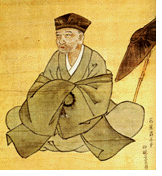
Call Me Maybe: The Haiku

Not only has Carly Rae Jepsen delivered for us the most irresistibly catchy pop tune in years with "Call Me Maybe," but she has also fashioned something of the perfect haiku.
I just met you, it's
just crazy—here's my number
So call me maybe
Sure, Basho (pictured above) could bring it with the 17 syllables. But could you also dance to it? I think not. Thus Carly Rae's (pictured below) song/poetic masterwork, and I say this without hyperbole, is the greatest cross-cultural artistic achievement in the history of the universe.


(NOTE TO SELF: Learn what the word "hyperbole" means sometime very soon.)

Shine On You Crazy Diamond

Okay, as long as we're on an acoustic Pink Floyd kick...

Going unplugged is not without its dangers. Sure, you could end up with a "Come As You Are" by Nirvana...but then again, you might end up with something as silly as Yes's unplugged "Roundabout" or as utterly heinous as Eric Clapton's emasculation of one-would-have-thought-impossible-to-emasculate "Layla"—conclusive proof, all on its own, that going unplugged is not necessarily always a good idea.

Now, having said that...

Judging by the remarkable effectiveness of this stripped down version, I would love for Dave Gilmour to do an entire night of Pink Floyd songs, largely or at least mainly solo. If he can pull this one off, I don't doubt he could do another two utterly riveting hours of Floyd and I surely wish he'd try.


Caught in the crossfire of childhood and stardom.

Sunday, August 12, 2012

Echoes

Of the dozen or so versions of "Echoes" I've heard, I find precisely none of them more interesting than this brief snippet—and only an epic like "Echoes" could make a six minute rendition seem brief. Check out how chuffed the entire band is to be taking the piss like this—and how quickly it turns serious, if still joyful.

A note  to the cameraman and director, however: if you'd included three times as many shots with Dave Gilmour and Rick Wright in the frame at the same time, it'd be three times better. You kept almost getting it right, but for the first half, at least, kept getting it just wrong instead. A pity.

Still pretty great, though.


Both inviting and inciting.